
Compare 2026 Colorado MPG and Annual Fuel Cost
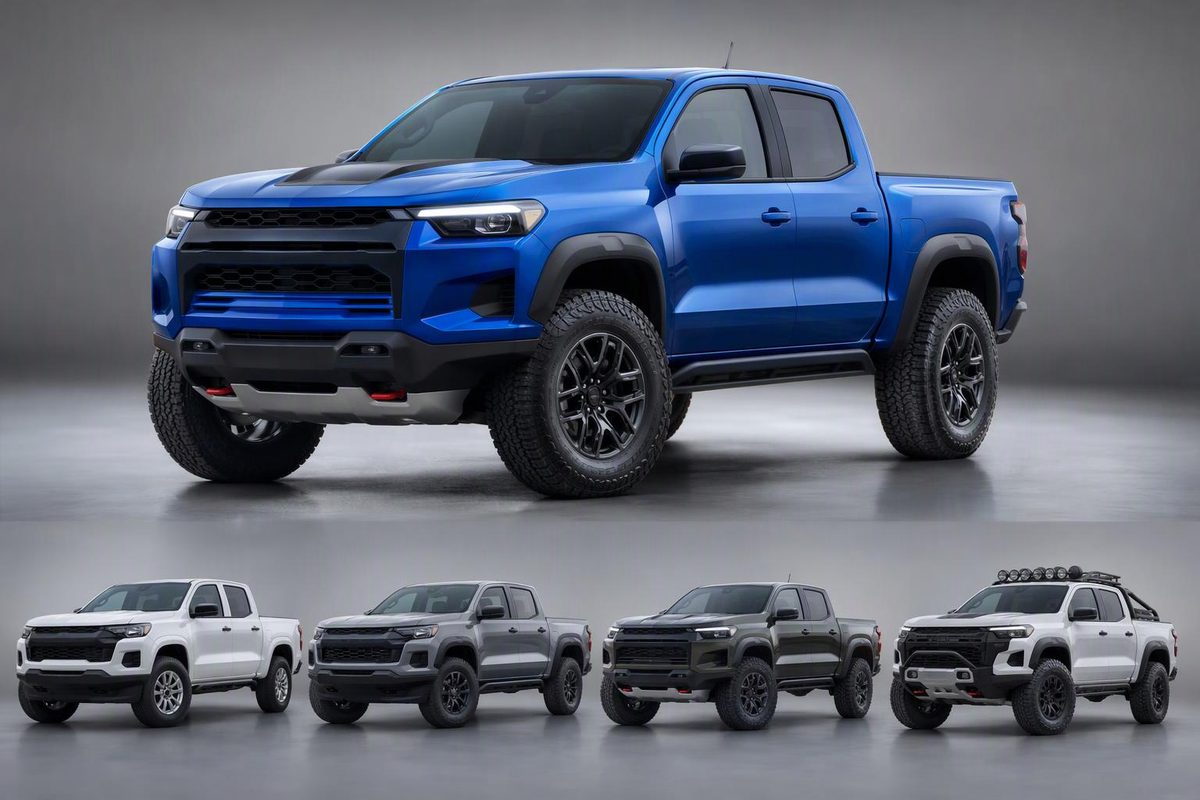
See 2026 Chevy Colorado MPG by 2WD, 4WD, mud-terrain, ZR2 and Bison setup, then estimate annual fuel use and cost for your driving.
The 2026 Chevy Colorado gets as much as 19 MPG city, 24 MPG highway and 21 MPG combined with 2WD. At the opposite end, the ZR2 Bison is rated at 16 MPG city, highway and combined. Standard 4WD falls between them at 17 city, 22 highway and 19 combined.
Every 2026 Colorado uses a 2.7L TurboMax four-cylinder and eight-speed automatic, but drivetrain, tires and off-road equipment change the EPA rating. The official FuelEconomy.gov 2026 Colorado listing divides the truck into five configurations.
Choose a configuration, annual mileage and fuel price to estimate your yearly fuel use and cost.
Colorado Annual Fuel-Cost Calculator
Estimates use the EPA combined MPG assigned to the selected 2026 configuration.
Estimated Annual Result
| Configuration | Combined | Cost at defaults |
|---|---|---|
| 2WD | 21 MPG | $2,000 |
| 4WD | 19 MPG | $2,211 |
| Mud Terrain 4WD | 18 MPG | $2,333 |
| ZR2 4WD | 17 MPG | $2,471 |
| ZR2 Bison 4WD | 16 MPG | $2,625 |
Source: FuelEconomy.gov 2026 Chevrolet Colorado ratings. Costs are estimates; default table assumes 12,000 miles and $3.50 per gallon.
2026 Chevy Colorado MPG Ratings
| EPA configuration | City MPG | Highway MPG | Combined MPG |
|---|---|---|---|
| Colorado 2WD | 19 | 24 | 21 |
| Colorado 4WD | 17 | 22 | 19 |
| Colorado Mud Terrain Tires 4WD | 17 | 20 | 18 |
| Colorado ZR2 4WD | 17 | 17 | 17 |
| Colorado ZR2 Bison 4WD | 16 | 16 | 16 |
These are EPA estimates published for the 2026 model year. The configuration descriptions matter: they are not permission to assign an MPG figure from the trim badge alone. Check the city, highway and combined values on the specific truck’s window sticker before buying.
The highest-rated configuration, Colorado 2WD, has a 21 MPG combined rating. Moving to the standard Colorado 4WD category lowers that figure by 2 MPG. The mud-terrain-tire 4WD category is rated 1 MPG below standard 4WD, while the ZR2 and ZR2 Bison categories are rated at 17 and 16 MPG combined.
Highway MPG shows the largest separation. The 2WD configuration is rated at 24 MPG highway, standard 4WD at 22 and the mud-terrain configuration at 20. ZR2 is rated at 17 MPG highway, and ZR2 Bison at 16. The published city-to-highway spread narrows as the equipment becomes more off-road-oriented: ZR2 and Bison have identical city and highway figures within their respective EPA ratings.
Tires, Drivetrain and Off-Road Equipment Separate the Ratings
The engine designation does not explain the MPG differences because Chevrolet lists the TurboMax engine and eight-speed transmission across the lineup. The configurations differ in drivetrain and equipment that affects how the truck performs on the EPA cycle.
Chevrolet lists 32-inch all-terrain tires for Trail Boss and Z71. ZR2 receives 33-inch mud-terrain tires and a 3-inch lift, while the ZR2 Bison uses 35-inch mud-terrain tires. Those specifications help explain why the EPA does not place every 4WD Colorado in one fuel-economy category. Chevrolet provides the current powertrain, tire and suspension details on its 2026 Colorado specifications page.
The mud-terrain entry in the EPA table should be treated as its own configuration. It is rated at the same 17 MPG city as standard 4WD, but its highway rating is 20 MPG instead of 22. Its combined rating consequently falls from 19 to 18 MPG.
ZR2 has a 17 MPG rating in all three EPA columns. Bison drops each figure to 16 MPG. Buyers comparing those trucks should evaluate their specialized off-road hardware rather than expecting the shared TurboMax engine to produce the standard 4WD rating.
Annual Fuel Cost Rises as Combined MPG Falls
At 12,000 miles per year and $3.50 per gallon, the five combined ratings produce the following estimates. Fuel quantities and dollar amounts are rounded to the nearest whole gallon and dollar.
| Combined MPG | Fuel used yearly | Annual cost | Versus 21 MPG |
|---|---|---|---|
| 21 MPG | 571 gal. | $2,000 | — |
| 19 MPG | 632 gal. | $2,211 | $211 more |
| 18 MPG | 667 gal. | $2,333 | $333 more |
| 17 MPG | 706 gal. | $2,471 | $471 more |
| 16 MPG | 750 gal. | $2,625 | $625 more |
Annual fuel cost equals annual miles divided by combined MPG, multiplied by the price per gallon.
Under those assumptions, standard 4WD costs about $211 more per year than the 21 MPG 2WD configuration. The mud-terrain rating raises that difference to about $333. ZR2’s 17 MPG figure works out to about $471 more, while the 16 MPG Bison rating produces a $625 difference.
Those comparisons change directly with mileage and fuel price. A truck driven more than 12,000 miles will have a larger annual difference, while one driven less will have a smaller difference. The calculator uses the selected EPA combined rating; it does not attempt to predict towing, payload, weather or route-specific consumption.
The cost table is best used to compare configurations under one consistent set of assumptions. It is not a fuel-price forecast, and $3.50 per gallon is only the example supplied for these calculations. Enter the price you actually expect to pay when estimating a personal budget.
A 21.4-Gallon Tank Gives Only a Theoretical Range
Chevrolet’s configurator shows a 21.4-gallon tank for a 2026 Colorado WT 2WD together with its 19/24/21 MPG rating (Chevrolet Colorado configurator). Multiplying that capacity by 21 MPG produces a theoretical 449-mile distance for that listed WT 2WD combination.
Applying the same 21.4-gallon capacity as a mathematical assumption to the other combined ratings gives:
- 449 miles at 21 MPG
- 407 miles at 19 MPG
- 385 miles at 18 MPG
- 364 miles at 17 MPG
- 342 miles at 16 MPG
Only the cited WT 2WD configurator entry establishes the 21.4-gallon figure here. The other results show what the arithmetic would be if the same stated capacity applied; confirm the tank specification for the exact truck rather than treating those figures as configuration-specific range ratings.
These are multiplication results, not expected driving ranges. They assume the full stated capacity is usable and that the truck sustains its combined rating. Normal refueling leaves a reserve, and city-heavy, highway-heavy or off-road driving will not necessarily match the combined test value.
The Right Configuration Depends on Needed Equipment
2WD uses the least fuel on the EPA cycle. Its 21 MPG combined rating is the lineup maximum, and its 24 MPG highway rating is also the highest figure in the table. It is the straightforward MPG choice when 4WD and the off-road equipment are not requirements.
Standard 4WD is the middle ground. Its 19 MPG combined rating is 2 MPG below 2WD but remains above the three more specialized EPA categories. At 12,000 miles and $3.50 per gallon, the calculation puts it about $211 per year above the 2WD configuration.
The mud-terrain category carries a highway penalty. It retains the standard 4WD category’s 17 MPG city figure, but highway MPG falls from 22 to 20. Confirm whether the exact truck is represented by that EPA category instead of assuming every non-ZR2 4WD Colorado gets 17/22/19.
ZR2 and Bison prioritize off-road equipment rather than fuel savings. ZR2’s 17 MPG combined rating is 4 MPG below 2WD. Bison’s 16 MPG combined figure is the lowest published rating among the five configurations.
If capability is driving the purchase, check the exact truck’s Colorado tow rating rather than accepting a fuel-economy tradeoff for equipment that does not match the intended trailer. Confirm the Colorado bed length against the cargo as well. MPG is only one part of choosing the correct configuration.
Actual Colorado MPG Can Be Lower Than the EPA Rating
EPA ratings are standardized comparison values, not promises for every route or owner. FuelEconomy.gov says towing or carrying excess weight lowers fuel economy, and EPA testing assumes 300 pounds of passengers and cargo. Aggressive driving, high speeds, cold short trips, hills, unpaved roads, roof-mounted cargo, poor tire inflation and engaging 4WD can also reduce MPG (factors affecting fuel economy).
Those factors are particularly relevant to a midsize truck. A Colorado bought for towing, hauling or trail use may spend much of its time in conditions that differ from the standardized test cycle. A driver comparing personal results with the EPA table should separate unladen commuting from tanks that include trailer miles, substantial payload or extended off-road driving.
City and highway labels also do not guarantee that a particular commute will reproduce the corresponding number. Traffic, speed, temperature, trip length and terrain can change the result. The combined rating is useful for consistent cost comparisons, but the mix of driving behind an owner’s annual fuel bill may be different.
Calculate Real MPG Over Several Fill-Ups
For a useful ownership measurement, divide miles driven by gallons added. Reset a trip meter after filling, drive normally, refill and use the miles since the previous fill divided by the gallons required at the second fill.
One tank can be distorted by a different pump shutoff point, an unusual route or a short period of towing. Measuring several fill-ups reduces the effect of a single refill. Compare periods with similar routes, weather, payload and trailer use when trying to determine whether the truck’s fuel economy has changed.
Keep the comparison tied to the exact configuration. A 2WD owner’s result should be considered against the 2WD rating, while ZR2 and Bison owners should use their respective EPA figures. The five published categories span 16 to 21 MPG combined, so treating every 2026 Colorado as though it has one common benchmark would hide a substantial configuration difference.