
Chevy Equinox Mileage: 2018–2026 MPG and EV Range
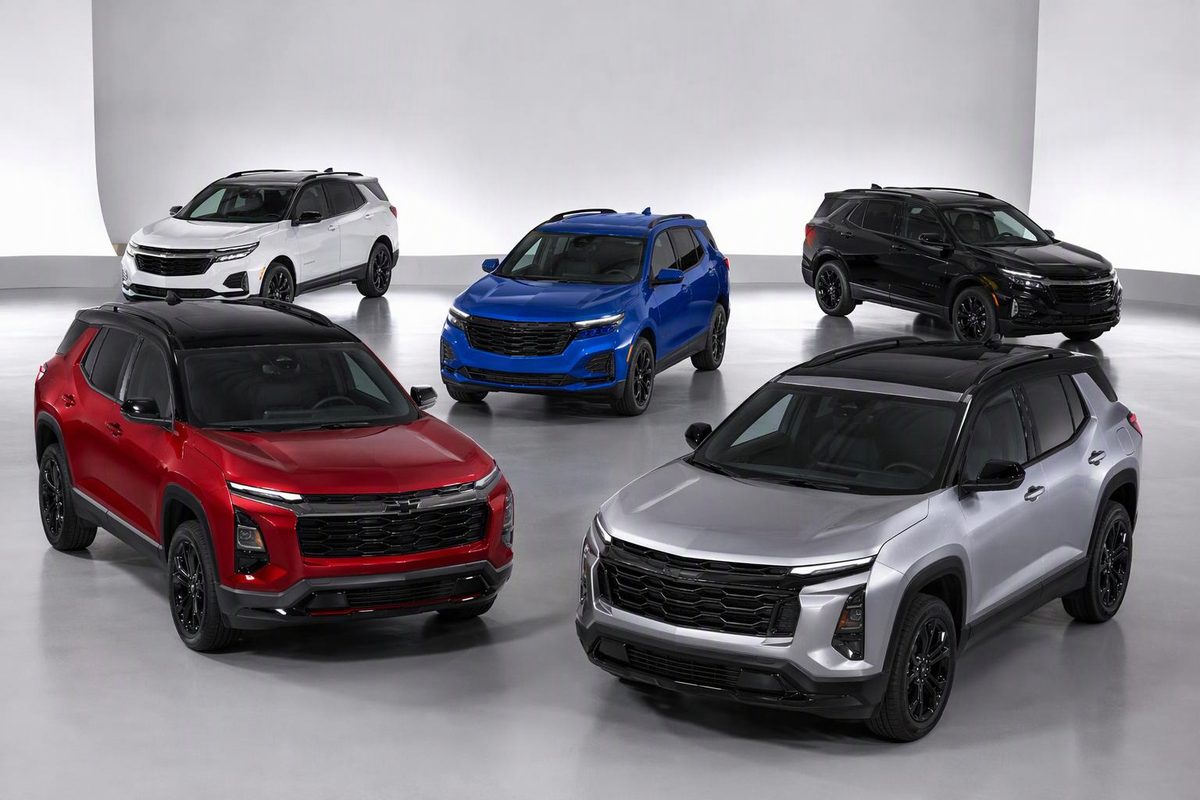
Compare 2018–2026 Chevy Equinox MPG by engine and drivetrain, plus Equinox EV efficiency, range, and trip-condition effects.
For the 2026 Chevrolet Equinox, EPA fuel economy is 26 city/29 highway/27 combined mpg with front-wheel drive and 25 city/29 highway/26 combined mpg with all-wheel drive. Both use a 1.5L turbocharged gasoline engine, but FWD has a continuously variable transmission while AWD uses an 8-speed automatic. The EPA’s 2026 Equinox listings specify regular gasoline.
“Equinox mileage” can also mean electric range or odometer life. This guide covers fuel economy and EPA-estimated Equinox EV range, not expected vehicle lifespan.
Chevy Equinox MPG chart: 2018–2026
Figures are EPA city/highway/combined ratings. “FWD” is front-wheel drive; “AWD” is all-wheel drive.
| Model year | Powertrain | Drive | EPA city/highway/combined |
|---|---|---|---|
| 2026 | 1.5L turbo, CVT | FWD | 26/29/27 mpg |
| 2026 | 1.5L turbo, 8-speed | AWD | 25/29/26 mpg |
| 2025 | 1.5L turbo, CVT | FWD | 26/28/27 mpg |
| 2025 | 1.5L turbo, 8-speed | AWD | 24/29/26 mpg |
| 2023–2024 | 1.5L turbo, 6-speed | FWD | 26/31/28 mpg |
| 2023–2024 | 1.5L turbo, 6-speed | AWD | 24/30/26 mpg |
| 2021–2022 | 1.5L turbo, 6-speed | FWD | 26/31/28 mpg |
| 2021–2022 | 1.5L turbo, 6-speed | AWD | 25/30/27 mpg |
| 2019–2020 | 1.5L turbo, 6-speed | FWD | 26/31–32/28 mpg |
| 2019–2020 | 1.5L turbo, 6-speed | AWD | 25/30/27 mpg |
| 2018 | 1.5L turbo, 6-speed | FWD | 26/32/28 mpg |
| 2018 | 1.5L turbo, 6-speed | AWD | 24/30/26 mpg |
| 2018–2020 | 2.0L turbo, 9-speed | FWD | 22/29/25 mpg |
| 2018–2020 | 2.0L turbo, 9-speed | AWD | 22/28/24 mpg |
| 2018–2019 | 1.6L turbodiesel, 6-speed | FWD | 28/39/32 mpg |
| 2018–2019 | 1.6L turbodiesel, 6-speed | AWD | 28/38/32 mpg |
Sources: EPA listings for 2018, 2019, 2020, 2021, 2022, 2023, 2024, 2025, and 2026.
Within this period, the fuel-economy leader is the 2018–2019 1.6L diesel at 32 mpg combined. Among gasoline versions, the 1.5L FWD generally rates highest at 27–28 mpg combined. The 2018–2020 2.0L turbo gives up 3–4 combined mpg and is listed by EPA for premium gasoline, an operating-cost difference that matters beyond the MPG number.
For 2025 and 2026, AWD has a small combined-rating penalty: 26 mpg versus 27 mpg. EPA consumption figures are 3.8 versus 3.7 gallons per 100 miles, which equates to about 12 additional gallons over 12,000 miles for AWD. Choose AWD for the traction requirement rather than treating the one-mpg difference as a large fuel-cost penalty.
Equinox EV efficiency and range
The Equinox EV is a separate battery-electric model. MPGe measures distance traveled on energy equivalent to a gallon of gasoline; it does not mean the vehicle uses gasoline. EPA explains that combined ratings weight city driving 55% and highway driving 45%. For estimating electricity use and cost, kWh/100 miles is the more direct measure (EPA electric-vehicle label guide).
| Model year and configuration | EPA city/highway/combined | Energy use | EPA range |
|---|---|---|---|
| 2026 EV FWD | 117/100/108 MPGe | 31 kWh/100 mi | 319 mi |
| 2026 EV AWD, 11-kW charger | 112/95/103 MPGe | 33 kWh/100 mi | 307 mi |
| 2026 EV AWD, 19-kW charger | 103/88/96 MPGe | 35 kWh/100 mi | 288 mi |
| 2025 EV FWD | 117/100/109 MPGe | 31 kWh/100 mi | 319 mi |
| 2025 EV AWD, 11-kW charger | 112/95/103 MPGe | 33 kWh/100 mi | 307 mi |
| 2025 EV AWD, 19-kW charger | 103/88/96 MPGe | 35 kWh/100 mi | 307 mi |
| 2024 EV FWD | 117/99/108 MPGe | 31 kWh/100 mi | 319 mi |
| 2024 EV AWD | 101/90/96 MPGe | 35 kWh/100 mi | 285 mi |
These are the EPA’s configuration-specific figures for 2024, 2025, and 2026. Check the exact drivetrain and onboard-charger listing rather than assuming every AWD Equinox EV has the same range.
At 12,000 miles, the EPA consumption rates imply about 3,720 kWh for a 31-kWh/100-mile FWD model and 4,200 kWh for a 35-kWh/100-mile AWD model. Multiply the applicable figure by your average home or public-charging price per kWh to estimate annual electricity cost.
Match the rating to the trip
The combined number is useful for comparison, but trip conditions determine what appears on the dashboard:
- Short, cold errands: Expect the largest gasoline MPG penalty because the engine spends more of each trip warming up. FuelEconomy.gov says a conventional gasoline car can use roughly 24% more fuel on a 3- to 4-mile trip at 20°F than at 77°F; the result varies by vehicle (cold-weather guidance).
- Steady, moderate-speed highway travel: This is the best case for approaching a gasoline Equinox’s highway rating. Higher speed increases aerodynamic drag; government guidance says mileage generally falls quickly above 50 mph (driving guidance).
- Fast Interstate travel with a roof box: Do not plan around the EPA highway number. A large, blunt roof box can reduce highway fuel economy by about 6%–17%; the cited reduction at 65–75 mph is 10%–25%, though box dimensions and shape matter.
- Stop-and-go traffic: Idling and repeated hard acceleration hurt gasoline economy. Aggressive driving can reduce mileage by roughly 10%–40% in stop-and-go conditions (EPA/DOE factors).
- Cold-weather EV travel: Cabin heat and battery temperature can materially reduce range. FuelEconomy.gov cites an average 41% EV range reduction in mixed driving at 20°F in the study underlying its guidance, but effects vary by model and use. Preconditioning while plugged in can preserve more driving range (EV efficiency tips).
For an owned gasoline Equinox, calculate several full tanks rather than judging one short trip: miles driven ÷ gallons added = mpg. For an Equinox EV, compare kWh/100 miles over similar routes and temperatures. Those consumption measures make it easier to separate a configuration difference from weather, speed, traffic, cargo, tire pressure, or driving style.