
How the Tow/Haul Button Changes the Way Your Truck Drives
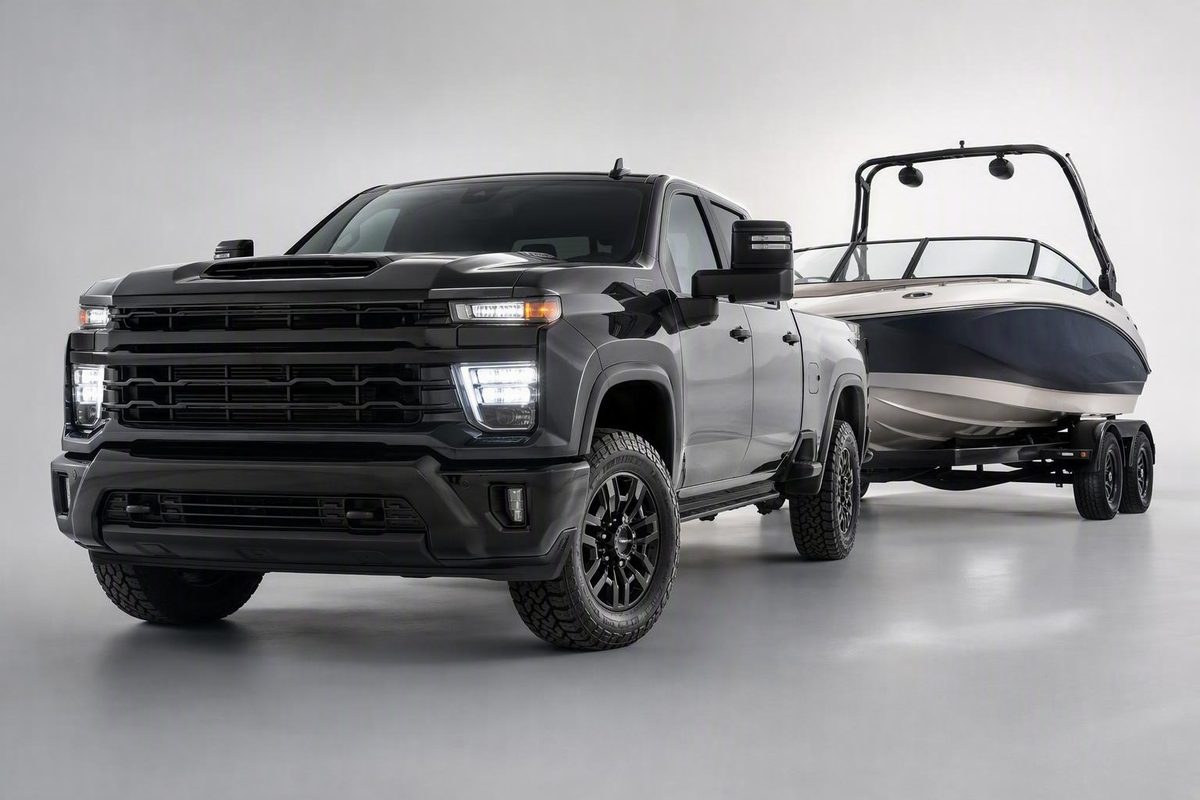
It can keep lower gears engaged and the engine running at higher speeds, which may decrease fuel economy while the mode is active.
The short answer: Tow/Haul changes how the vehicle uses its gears
Tow/Haul mode commonly changes an automatic transmission’s shift strategy for towing a trailer or carrying a heavy payload. It does not create more engine power. Instead, it changes when and how the transmission uses the gears already available.
In Normal mode, the transmission typically tries to reach higher gears relatively quickly when conditions permit. That can support quieter, more efficient driving when the vehicle is lightly loaded. With a substantial trailer or payload, however, shifting up too early can leave the engine working harder to maintain speed.
Tow/Haul generally responds by delaying upshifts, holding lower gears longer, and downshifting sooner. This keeps the engine closer to a useful operating range when the added weight makes acceleration and grade climbing more demanding. It may also select lower gears on descents to increase engine braking, according to Capital One Auto Navigator’s overview of Tow/Haul operation.
The difference may become noticeable as soon as you accelerate. The truck might stay in each gear longer, allow the engine to rev higher, and respond more readily when climbing a hill or merging onto a highway. When you release the accelerator or slow on a descent, it may downshift earlier to provide more engine braking.
Here is a compact comparison of what drivers commonly experience:
| Driving situation | Normal mode | Tow/Haul mode |
|---|---|---|
| Acceleration | May upshift relatively early for quietness and efficiency | Usually holds lower gears longer to support acceleration under load |
| Level cruising | Seeks an appropriate higher gear when conditions permit | May avoid an upshift when the load could cause repeated shifting |
| Climbing | May downshift after speed drops or power demand rises | Often downshifts sooner and holds the lower gear longer |
| Descending | May coast in a higher gear with less drivetrain resistance | May select or hold a lower gear to increase engine braking |
This is a common operating pattern, not a universal programming specification. Some vehicles may also alter accelerator response, restrict access to higher gears, or coordinate Tow/Haul with grade-braking or other towing-related systems. Those additional functions are model-dependent and should not be assumed merely because a vehicle has a Tow/Haul button.
Exact behavior depends on the model, model year, engine, transmission, installed equipment, and software calibration. Two trucks from the same brand may behave differently if they use different powertrains, and a redesigned generation may not operate like the model it replaced. General guidance can explain the feature’s purpose, but the owner’s manual determines how it operates in a particular truck or SUV.
Why it holds lower gears and lets the engine rev higher
A heavily loaded vehicle needs more force to accelerate and more sustained output to maintain speed on a grade. If the transmission shifts into a higher gear too soon, engine speed may fall below the range best suited to the immediate demand. The truck may feel reluctant, lose momentum, require more accelerator input, or downshift again almost immediately.
Tow/Haul delays that upshift so the engine can remain in a more useful operating range. This can be helpful when:
- Starting from a stop with a trailer
- Entering a fast road with a heavy payload
- Passing while loaded
- Climbing a sustained grade
- Driving through rolling terrain
- Encountering headwinds that repeatedly change the required power
The principle is similar to choosing a lower gear on a bicycle before climbing a hill. The lower gear does not make the rider stronger, but it lets the rider apply existing effort more effectively. Tow/Haul does something comparable with the vehicle’s available engine output and transmission ratios.
That is why higher engine speed is often normal when Tow/Haul is active. The transmission may intentionally remain in a lower gear even when Normal mode would have shifted up. You may hear more engine noise, see a higher reading on the tachometer, and notice later—or sometimes firmer—shifts. Those changes alone do not establish that the transmission is being harmed.
Tow/Haul can also address gear hunting, meaning repeated cycling between higher and lower gears. Imagine a truck pulling a trailer over a series of mild hills. It reaches a crest and upshifts, begins the next incline and downshifts, and then repeats the process. Changes in wind, road speed, accelerator position, grade, and load can all contribute.
By holding a lower gear longer or delaying an upshift, Tow/Haul may reduce unnecessary back-and-forth shifting. A Ford dealership’s overview similarly describes the mode as holding gears longer and shifting less frequently, although its statements about throttle response and other functions should be treated as application-specific rather than universal Tow/Haul behavior described across Ford models.
Reducing excessive shifting may help manage transmission heat. That is a narrow benefit, not a guarantee: Tow/Haul does not ensure that the transmission will remain within temperature limits or prevent mechanical damage. Cooling-system condition, fluid condition, ambient temperature, road grade, vehicle speed, load, and total vehicle configuration still matter.
The practical interpretation is straightforward. If Tow/Haul keeps the truck in a suitable gear instead of repeatedly shifting up and down, the resulting higher RPM may be an intentional part of load management rather than a defect.
How Tow/Haul helps on downhill grades
Tow/Haul is not only for acceleration and climbing. One of its most useful characteristics can appear while descending.
When the driver eases off the accelerator, selecting a lower gear causes the engine and drivetrain to resist vehicle speed more strongly. This resistance is called engine braking. The engine is not applying the wheel brakes; the lower gear instead makes it harder for the vehicle’s weight and momentum to continue increasing its downhill speed.
In Tow/Haul mode, the transmission may downshift sooner or remain in a lower gear during a descent. The result is usually higher engine speed and stronger resistance to coasting.
That higher RPM can sound dramatic if you are accustomed to quiet, high-gear cruising. Within the vehicle’s programmed operating range, however, it can be a normal consequence of using a lower gear. The transmission is allowing the engine to help resist the combined momentum of the vehicle, cargo, and trailer.
Engine braking can help manage downhill speed and reduce continuous demand on the service brakes. “Reduce” is the important word: Tow/Haul does not remove the need for the brake pedal or turn the engine into an independent stopping system engine-braking function in Tow/Haul mode.
Tow/Haul also does not replace trailer-braking equipment specified by the vehicle or trailer manufacturer. Before towing, follow the applicable instructions for trailer connections, braking equipment, loading, and operation. A Ram 1500 dealership guide likewise notes that Tow/Haul does not replace properly secured trailer connections Ram 1500 Tow/Haul operating overview.
The amount and character of engine braking vary. Gasoline, diesel, hybrid, and other powertrains may use different strategies, and some vehicles provide additional controls such as selectable gear limits or an exhaust brake. Do not assume that selecting Tow/Haul automatically activates or coordinates every available braking feature.
It is also unwise to attach a universal number to the benefit. The supplied evidence does not establish a defensible percentage for reduced brake temperature, brake wear, or stopping distance. The supportable conclusion is narrower: using a lower gear can help control downhill speed and reduce continuous reliance on the service brakes, but the conventional braking system remains essential.
When to use Tow/Haul mode
There is no manufacturer-neutral trailer-weight or payload threshold at which every driver should press the Tow/Haul button. A weight that is substantial for one vehicle may be routine—or excessive—for another. Transmissions, axle ratios, cooling packages, engines, equipment, and published ratings differ.
Use the owner’s manual instead of relying on a rule such as “activate Tow/Haul above a certain number of pounds.” If the manual recommends the mode for a particular load or driving condition, that vehicle-specific instruction should take priority.
As a practical checklist, consider Tow/Haul when one or more of these conditions applies:
- You are towing a substantial trailer.
- The bed or cargo area carries a heavy payload.
- The route includes meaningful climbs or descents.
- The vehicle needs sustained response for loaded starts or highway merges.
- The trip involves frequent stops while loaded.
- The transmission repeatedly shifts up and down.
- Wind or rolling terrain makes it difficult to hold a steady gear.
- Normal mode feels too eager to upshift under the current load.
The decision is not simply “highway versus city.” Tow/Haul can be appropriate on a flat highway when the load is substantial or the transmission keeps hunting between gears. Conversely, Normal mode may be adequate for a small, lightly loaded trailer on a short, level trip if the manufacturer’s guidance permits it and the transmission operates smoothly.
Terrain can matter as much as apparent load size. A trailer that feels modest on level ground may cause repeated shifting on a hilly route. A heavy bed load may justify Tow/Haul even though no trailer is attached. The feature is intended for hauling as well as towing.
Consider these four common scenarios:
1. A travel trailer on rolling terrain
Tow/Haul is likely to be useful. The transmission may hold lower gears through successive hills rather than upshifting at every crest and downshifting on every rise. It may also provide more engine braking on the downhill sections.
2. A heavy payload in the bed
Tow/Haul may be appropriate even without a trailer. The extra weight still affects acceleration, grade climbing, braking demand, and transmission behavior. If the truck repeatedly changes gears or feels too eager to upshift, the load-focused shift schedule may help.
3. A small utility trailer on a level local trip
Normal mode may be sufficient if the trailer is light relative to the vehicle, the route is easy, and the transmission is not hunting. Tow/Haul is not necessarily harmful in this situation, but it may produce unnecessary engine speed, noise, and later shifts. The owner’s manual should guide the decision rather than trailer attachment alone.
4. A long loaded descent
Tow/Haul can be especially useful because it may command a lower gear and increase engine braking. The driver must still use the service brakes as needed and follow the manufacturers’ instructions for the vehicle, trailer, and any trailer-braking system.
For routine unloaded driving—such as commuting, grocery trips, or carrying light cargo—Normal mode is usually the natural choice. It generally provides the shift timing intended for ordinary operation. Load, grade, wind, braking demand, and repeated shifting are better clues than road type alone.
What to expect: RPM, shift feel, noise, and fuel economy
A truck can feel noticeably different with Tow/Haul active, and many of those differences are intentional.
The most obvious change is often higher RPM. Because the transmission holds a lower gear longer, the engine may turn faster than it would at the same moment in Normal mode. During acceleration, you may hear the engine build more speed before the transmission upshifts. On a hill, it may remain in a lower gear after the grade becomes less severe rather than shifting immediately.
You may also notice:
- Later upshifts during acceleration
- Earlier downshifts when more power is needed
- More downshifts while slowing or descending
- Stronger resistance when you release the accelerator
- More immediate response to changes in load or grade
- Shifts that feel more deliberate or somewhat firmer
- Less cycling between adjacent gears
These effects should be assessed relative to the vehicle’s normal Tow/Haul behavior. “Different from Normal mode” does not automatically mean “abnormal.” The purpose of the setting is to substitute a load-oriented calibration for the routine shift schedule.
Fuel economy may decrease while Tow/Haul is active because the transmission can stay in lower gears and the engine may operate at higher speeds. The size of any difference cannot be predicted responsibly without accounting for trailer weight, payload, terrain, wind, traffic, speed, engine, transmission, axle ratio, and software calibration. Towing itself requires additional energy, making it difficult to isolate the effect of the mode from the effect of the load.
That does not mean Normal mode will always use less fuel during every loaded trip. If Normal mode causes repeated shifting or requires large accelerator inputs to recover speed, the comparison becomes more complicated. Tow/Haul is principally intended to manage power delivery and engine braking, not to maximize fuel economy.
Forum reports sometimes include specific gears, RPM readings, and fuel-economy comparisons. Those anecdotes reflect individual vehicles and uncontrolled conditions and should not be treated as expected results for another truck. Weather, load, tires, route, traffic, software, and driving style can change the outcome.
There is also an important distinction between expected behavior and symptoms worth investigating.
Usually consistent with normal Tow/Haul operation:
- The Tow/Haul indicator appears after selection.
- The engine revs higher before an upshift.
- The transmission holds a lower gear on a climb.
- The truck downshifts while slowing or descending.
- Engine braking feels stronger.
- Fuel consumption may increase under comparable conditions.
Reasons to check the manual or seek appropriate evaluation:
- A warning or malfunction light appears.
- The mode does not engage or its indicator behaves unexpectedly.
- The vehicle slips, loses drive, or fails to select gears properly.
- Shifting is distinctly abnormal rather than merely later or firmer.
- A displayed engine or transmission operating limit is exceeded.
- New noises, vibration, odors, or fluid leakage accompany the change.
- The system behaves differently from the procedure in the owner’s manual.
Tow/Haul is not a diagnostic cure. If the vehicle has a mechanical, electrical, cooling, or maintenance problem, selecting a different shift program does not repair it.
What Tow/Haul mode does not do
Tow/Haul changes how the vehicle uses its existing capability. It does not increase that capability.
Pressing the button does not add horsepower or torque. Tow/Haul also cannot make an overloaded combination acceptable. Those limits depend on the vehicle and equipment configuration, not the selected transmission program limits of Tow/Haul mode.
The mode cannot replace the fundamentals of preparing and operating a towing combination:
- A suitable hitch and compatible hitch components
- Correct coupling and secure trailer connections
- Proper tongue weight and weight distribution
- Cargo secured against movement
- Trailer brakes specified for the combination
- Tires of suitable condition, pressure, and capacity
- Routine vehicle and trailer maintenance
- Working lights and electrical connections
- Appropriate mirrors and visibility
- Careful speed, following distance, braking, and steering
- Compliance with vehicle, hitch, and trailer manufacturer instructions
A poorly distributed trailer can still handle poorly with Tow/Haul selected. An unsuitable hitch does not become suitable. Unsecured cargo can still move, worn tires remain worn, and engine braking does not replace properly configured braking equipment.
Tow/Haul should therefore be understood as an operating aid. It may provide a more appropriate shift schedule for extra weight and demanding terrain, but it is only one part of a properly configured towing or hauling setup.
Avoid broader promises. The mode does not guarantee safety, stability, lower temperatures, longer component life, or protection from transmission failure. The supportable claim is simpler: Tow/Haul can improve how the transmission manages a load by holding lower gears, reducing unnecessary shifting, and increasing engine braking.
How to turn it on—and why the owner’s manual is the final authority
Tow/Haul controls are not standardized. Depending on the vehicle, the control may be:
- A button on the dashboard
- A button or switch on the gear selector
- A control on the steering-column stalk
- An option on a drive-mode dial
- A selection within the vehicle’s drive-mode system
Many vehicles illuminate a Tow/Haul symbol or display a message in the instrument cluster after the mode is selected. Pressing the control again may return the vehicle to Normal mode, but the exact procedure and indicator behavior depend on the model.
Some vehicles allow Tow/Haul to be selected or canceled while moving. That should not be assumed for every truck or SUV. Verify the procedure before attempting it, particularly if the vehicle combines Tow/Haul with manual gear limits, four-wheel-drive settings, an exhaust brake, cruise control, or other drive modes.
Restart behavior also varies. As a clearly labeled model-specific example, the official manual for a 2022 Ram 2500/3500 equipped with the applicable eight-speed automatic says Normal operation returns whenever the engine starts, so the driver must select Tow/Haul again. The same manual warns against using the feature on icy or slippery roads because increased engine braking can make the rear wheels slide 2022 Ram 2500/3500 Tow/Haul instructions and warning.
That warning applies to the identified Ram application. It should not be converted into a universal rule for every truck or SUV. Vehicles may distribute power differently, use different stability systems, or provide distinct snow, ice, and towing instructions.
For an exact model and model year, verify:
- Where the Tow/Haul control is located
- What indicator confirms activation
- Whether the mode may be selected while moving
- Whether it resets after an engine restart
- Whether it restricts or changes access to certain gears
- How it interacts with cruise control
- How it interacts with four-wheel drive or other drive modes
- Whether it coordinates with grade braking or an exhaust brake
- What low-traction warnings apply
- What trailer-brake and loading instructions accompany its use
Chevrolet owners should be particularly careful not to treat generic guidance as official Silverado instructions. Silverado operation can differ by model year, series, engine, transmission, and equipment. General information can explain what Tow/Haul is trying to accomplish, but only the Chevrolet owner’s manual for the exact truck can establish its controls, activation procedure, and restrictions.
Frequently asked questions
Does Tow/Haul mode increase towing capacity?
No. Tow/Haul changes transmission and, on some vehicles, related powertrain behavior. It does not add engine power or raise towing, payload, axle, vehicle, hitch, or combined-weight ratings Tow/Haul capabilities and limitations.
Determine capacity from the documentation for the exact vehicle, configuration, hitch, and trailer. If any applicable rating would be exceeded, selecting Tow/Haul does not make the load acceptable.
Can you turn Tow/Haul mode on while driving?
Some vehicles permit Tow/Haul to be activated or canceled while moving, but this is not universal. Consult the owner’s manual for the exact model year, engine, and transmission before doing so.
Also confirm whether the mode remains active after a restart. Some vehicles return to Normal mode each time the engine starts, while others may behave differently.
Should you use Tow/Haul mode on the highway?
It can be appropriate on the highway when towing a substantial trailer or carrying a heavy payload. It may be especially useful if the transmission repeatedly shifts between gears, the route includes grades, or loaded merging requires sustained power.
Highway use is not automatically necessary for a light load on level roads. Let the owner’s manual, load, terrain, and transmission behavior guide the decision rather than the road type alone.
Does Tow/Haul mode use more gas?
It may. Holding lower gears and operating at higher engine speeds can increase fuel consumption. The actual effect varies with the vehicle, load, speed, terrain, wind, traffic, and driving style, so there is no reliable universal percentage or miles-per-gallon estimate.
Fuel economy is not the mode’s primary purpose. Tow/Haul prioritizes load-appropriate shifting and engine braking.
Should Tow/Haul mode be used on snow or ice?
Check the owner’s manual for the exact vehicle. The official 2022 Ram 2500/3500 manual specifically warns against using Tow/Haul on icy or slippery roads because increased engine braking can cause the rear wheels to slide Ram’s model-specific low-traction warning.
That warning is specific to the identified Ram application, not a universal prohibition for every truck or SUV. Follow the low-traction instructions issued for your model, year, transmission, and powertrain.
The bottom line: Use Tow/Haul when the trailer, payload, terrain, downhill braking demand, or repeated shifting calls for a more load-focused shift strategy. Expect lower gears, higher RPM, later shifts, and stronger engine braking.
The button changes how the vehicle uses its existing capability; it does not increase that capability. The owner’s manual for the exact model, year, transmission, and powertrain remains the final authority on activation procedures and operating restrictions.