
Tahoe Trunk Space: Cargo Volume and Real Luggage Fit
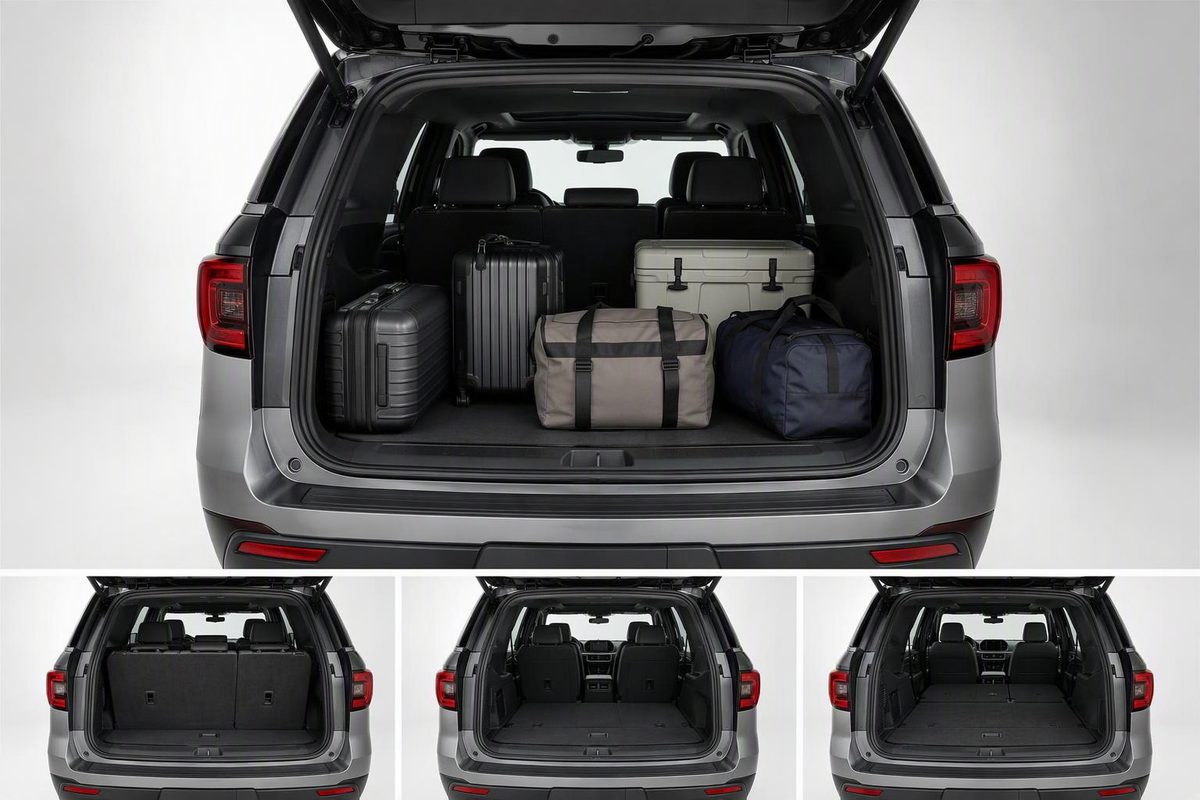
Check Tahoe cargo space behind each row, compare 2020, 2021 and 2026 figures, and see what luggage tests reveal about usable room.
The 2026 Chevrolet Tahoe’s listed cargo volumes are 25.5 cu. ft. behind the third row, 72.5 cu. ft. with the third row folded, and 122.7 cu. ft. with both rear rows folded. The 25.5-cu.-ft. figure is the relevant “trunk space” number when passengers need all three rows—not the advertised maximum. These figures appear in Car and Driver’s 2026 Tahoe LS 2WD specifications; Chevrolet also lists the 122.7-cu.-ft. maximum.
Cargo space behind each row
The 2021 redesign is an important dividing line for used buyers. Chevrolet’s brochures show an increase from 15.3 to 25.5 cu. ft. behind the third row between 2020 and 2021.
| Model year | Behind third row: all rows upright | Behind second row: third row folded | Behind front row: both rear rows folded |
|---|---|---|---|
| 2020 | 15.3 cu. ft. | 51.7 cu. ft. | 94.7 cu. ft. |
| 2021 | 25.5 cu. ft. | 72.6 cu. ft. | 122.9 cu. ft. |
| 2026 | 25.5 cu. ft. | 72.5 cu. ft. | 122.7 cu. ft. |
Use the exact model-year figures: Chevrolet’s 2021 brochure lists slightly different folded-seat volumes from the 2026 specifications. Also distinguish folded from removed seats. The 2020 brochure separately lists 54.0 cu. ft. behind the second row with the third-row seat removed, versus 51.7 cu. ft. with it folded.
For a family trip, start with the first cargo column. If nobody needs the third row, the middle column describes the available space. The last column applies only when neither rear row is carrying passengers.
How much luggage fits with the third row up?
A published test provides a better packing reference than dividing cubic feet by suitcase volume.
In Edmunds’ March 2025 test of a 2025 Tahoe RST, James Riswick fitted two checked-size roller bags, three carry-on-style rollers and a small duffle behind the upright third row. The checked-size bags measured 26 × 16.5 × 12 inches and 26 × 16.5 × 10 inches; the accepted duffle measured 20 × 10.5 × 10.5 inches.
A larger duffle also physically fitted, but the tester rejected that arrangement because it sat too close to the roof and obstructed too much rear visibility. Treat this as a result for those particular bags—not a promise that any six suitcases will fit, or an endorsement of stacking luggage high. Chevrolet’s loading guidance below still applies.
If you need a stroller, cooler or bulky sports gear as well as everyone’s luggage, bring those items to the vehicle before buying or renting it. One awkwardly shaped item can determine the packing arrangement.
Measurements to check before loading
Cargo volume is not a rectangular box dimension. For furniture, crates or a folded stroller, check:
- Liftgate opening: clear width and height through the opening, not exterior body width.
- Usable depth: seatback to closed liftgate, measured at both floor level and the top of the item.
- Narrowest floor width: between wheelhouses and interior trim. The 2026 LS 2WD specifications list 49.5 inches between wheelhouses, but that does not establish liftgate clearance.
- Seat position and floor shape: measure with passengers’ seats adjusted as they will be used, including any folded-seat slopes, liners or storage organizers.
Finish with a weight check. The 2026 Tahoe/Suburban owner’s manual, pages 190–194, directs owners to use the vehicle-specific Tire and Loading Information label and subtract occupant weight to determine remaining luggage capacity. Include aftermarket accessories and any load transferred from a trailer, and stay within gross vehicle and axle weight ratings. The manual warns against stacking heavier items above the seat tops and recommends securing cargo.
If all three rows must stay occupied and your actual load does not fit, the next decision is covered in our Tahoe versus Suburban space-and-footprint guide.