
How Much Can a Silverado 2500 HD Tow—and What Limits Your Truck?
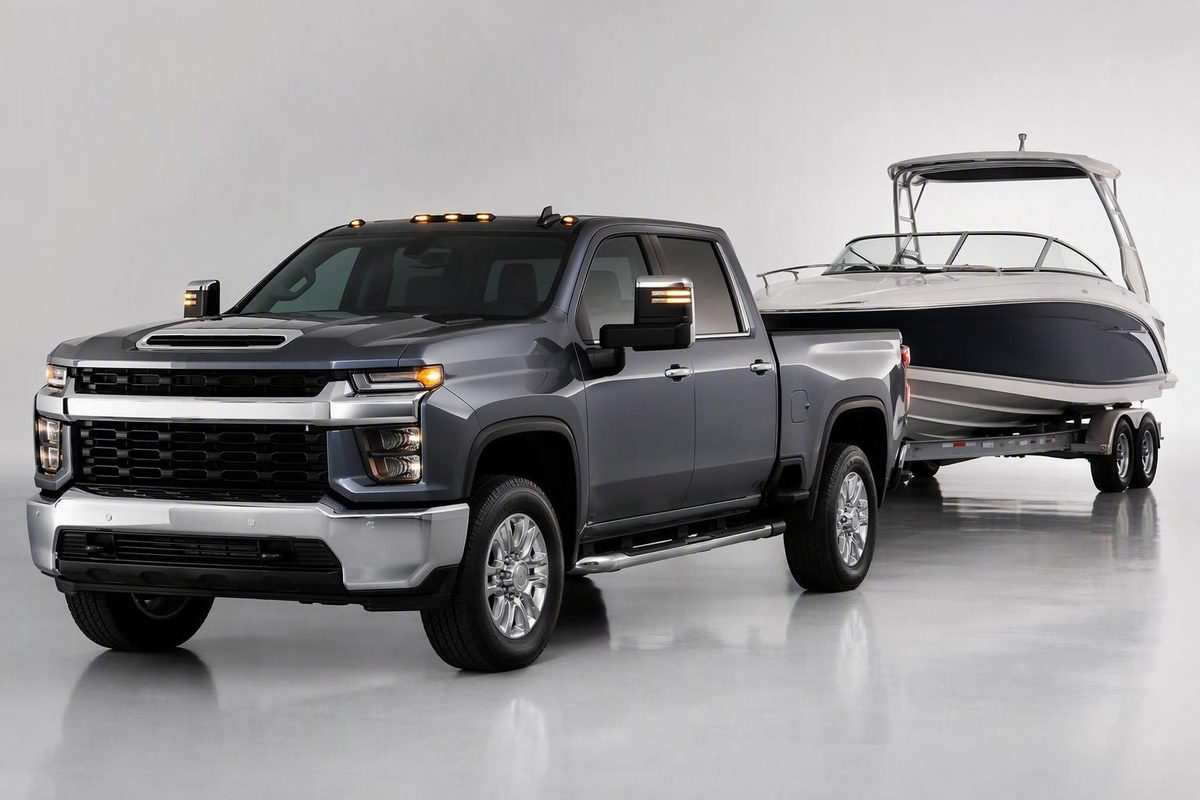
This is a dealer-reported overview of 2025 model-year figures, not a substitute for Chevrolet’s official trailering documentation for a specific truck. Readers researching a 2026 or earlier Silverado 2500 HD must use information for that model year.
Quick answer: reported 2025 Chevy 2500 towing limits
“Chevy 2500” commonly refers to the Chevrolet Silverado 2500 HD, but the phrase does not identify a model year, engine, cab, bed, drivetrain, hitch, or trailering package. Each of those details can affect the rating.
For the 2025 model year, Chevrolet dealership summaries report that a properly equipped Silverado 2500 HD can tow up to 20,000 pounds conventionally or up to 22,420 pounds with a fifth-wheel or gooseneck arrangement. These are maximums for selected configurations, not ratings for every 2500 HD, and the supplied evidence does not include Chevrolet’s official trailering guide. Biggers Chevrolet reports both headline maximums and the configuration qualifications.
Dealer-reported 2025 Silverado 2500 HD maximums
Hitch arrangement Reported maximum trailer weight Conventional towing Up to 20,000 lb Fifth-wheel or gooseneck towing Up to 22,420 lb Properly equipped only. The applicable limit depends on the exact truck, installed equipment, hitch, payload, axle limits, and loaded trailer.
The cited 22,420-pound peak is associated with a 2WD Regular Cab Long Bed, the 6.6-liter Duramax turbo-diesel, fifth-wheel equipment, and the Max Trailering Package. The comparable 4WD Regular Cab Long Bed Duramax is reported at 22,050 pounds, illustrating that a drivetrain change can alter the rating.
That comparison does not make 2WD universally preferable. Four-wheel drive may better suit worksites, winter roads, unpaved access, or other traction needs. The correct choice is the complete configuration that meets the towing task without exceeding any truck, axle, hitch, or trailer limit.
Treat the headline Chevy 2500 towing capacity as a shopping-screen number. Before towing, identify the truck’s model year and complete build, confirm its installed equipment, and match it to Chevrolet’s model-year documentation and the labels on the truck and hitch.
2025 towing-capacity matrix by engine and hitch type
The table below is a partial compilation of dealer-reported figures, not an official capacity lookup chart. The supplied dealership material omits some combinations and includes at least one awkward entry that may be erroneous. Missing configurations must not be filled in by inference.
The detailed dealership tables place the gas engine’s conventional ratings at approximately 14,500–16,000 pounds and its fifth-wheel or gooseneck ratings at approximately 18,000–18,700 pounds. They also identify several diesel configurations that require the Max Trailering Package for their highest listed limits. Biggers Chevrolet provides the configuration breakdown summarized below.
| Engine | Hitch type | Cab and bed | Drivetrain | Required package or qualification | Dealer-reported maximum trailer weight |
|---|---|---|---|---|---|
| 6.6L gas V8 | Conventional | Configurations shown in the dealer chart | 2WD or 4WD, depending on configuration | Proper equipment; exact cab, bed, wheels, trim, and equipment matter | Approximately 14,500–16,000 lb |
| 6.6L gas V8 | Fifth-wheel or gooseneck | Configurations shown in the dealer chart | 2WD or 4WD, depending on configuration | Qualifying truck and properly rated bed-mounted hitch | Approximately 18,000–18,700 lb |
| 6.6L Duramax diesel | Conventional | Qualifying configurations, including cited Crew Cab examples | 2WD or 4WD, depending on configuration | Max Trailering Package required for some listed 20,000-lb entries | Up to 20,000 lb |
| 6.6L Duramax diesel | Fifth-wheel | Regular Cab Long Bed | 2WD | Fifth-wheel equipment and Max Trailering Package | 22,420 lb |
| 6.6L Duramax diesel | Fifth-wheel | Regular Cab Long Bed | 4WD | Fifth-wheel equipment and Max Trailering Package | 22,050 lb |
| 6.6L Duramax diesel | Fifth-wheel or gooseneck | Crew Cab Long Bed | 2WD | Max Trailering Package | 22,070 lb |
| 6.6L Duramax diesel | Fifth-wheel or gooseneck | Crew Cab Long Bed | 4WD | Max Trailering Package | 21,490 lb |
| 6.6L Duramax diesel | Fifth-wheel or gooseneck | Crew Cab Standard Bed | 2WD | Max Trailering Package | 21,600 lb |
| 6.6L Duramax diesel | Fifth-wheel or gooseneck | Crew Cab Standard Bed | 4WD | Max Trailering Package | 21,510 lb |
The specific Regular Cab peak is described as a fifth-wheel configuration in the detailed dealer material. Do not assume every exact fifth-wheel figure also applies identically to a gooseneck unless Chevrolet’s documentation for the truck groups the two hitch arrangements under the same rating.
Several conclusions can safely be drawn from this partial evidence:
- The engine does not establish the rating by itself.
- Conventional and bed-mounted hitch ratings must be checked separately.
- Cab, bed, drivetrain, wheels, trim, and installed equipment can change the result.
- The Max Trailering Package is required for several top figures, but the package does not make all trucks equivalent.
- A trailer-weight maximum does not, by itself, confirm that a particular truck can carry the trailer’s loaded hitch weight.
The supplied sources also contain an unresolved conflict. Olson Chevrolet says selected gas-powered 2500 HD configurations can reach 20,000 pounds conventionally, while the more detailed configuration tables supplied elsewhere place the shown gas conventional ratings between 14,500 and 16,000 pounds. Olson also notes that wheel size, cab, bed, drivetrain, payload, and trailering equipment affect the result. Olson Chevrolet presents the broader gas claim and its qualifications.
Do not resolve that discrepancy by choosing the larger figure. Until an exact truck can be matched to Chevrolet’s applicable model-year chart, use the dealer matrix only to compare possible configurations—not as permission to tow at a stated weight.
Why conventional, fifth-wheel, and gooseneck ratings differ
The vertical load at that connection is commonly called pin weight.
Its vertical hitch load should be evaluated using the terminology and limits provided by the truck, hitch, and trailer manufacturers rather than automatically calling it fifth-wheel pin weight.
The dealer-reported 2025 headline figures illustrate that distinction: 20,000 pounds conventionally versus 22,420 pounds for the highest cited bed-mounted setup. Olson Chevrolet separately reports the conventional and fifth-wheel or gooseneck maxima.
Installing a fifth-wheel or gooseneck hitch does not grant the truck the higher rating by itself. The truck must match the required engine, cab, bed, drivetrain, package, wheels, trim, hitch preparation, and other qualifying equipment. The installed hitch must also be appropriate for the load under its own documentation.
Three different weights are relevant:
A trailer can be below a dealer-reported trailer-weight maximum while imposing a hitch load that the truck cannot accommodate under its vehicle, axle, payload, or hitch documentation. Bed-mounted trailers deserve particular attention because the truck carries the hitch hardware and the vertical trailer load in addition to occupants, cargo, and accessories.
Use loaded rather than merely advertised empty or “dry” trailer figures.
The supplied evidence does not establish a universal tongue-weight percentage or a universal towing margin. Follow the applicable Chevrolet, hitch, and trailer documentation for the actual combination.
Gas versus Duramax diesel for towing
The cited 2025 dealership material lists two 6.6-liter V8 engines:
| Engine | Dealer-reported output | Transmission | Listed drivetrain availability |
|---|---|---|---|
| 6.6L gasoline V8 | 401 hp and 464 lb-ft of torque | Ten-speed automatic | 2WD or 4WD |
| 6.6L Duramax turbo-diesel V8 | 470 hp and 975 lb-ft of torque | Ten-speed automatic | 2WD or 4WD |
The same material places the shown gas conventional configurations at approximately 14,500–16,000 pounds, gas fifth-wheel or gooseneck configurations at approximately 18,000–18,700 pounds, qualifying diesel conventional configurations at up to 20,000 pounds, and the cited peak diesel fifth-wheel configuration at 22,420 pounds. Tom Kelley Chevrolet lists the engine outputs and the associated towing comparisons.
The diesel’s substantially higher reported torque coincides with the highest cited towing figures, but output alone does not determine capacity. Cab, bed, drivetrain, wheels, trim, chassis limits, hitch arrangement, and trailering equipment also matter.
Start with the trailer and operating requirements rather than the engine badge.
When the gas V8 may fit
Consider a gas configuration when the intended trailer’s loaded weight and hitch load fit within the verified limits of an available gas truck. Cab and bed preferences, drivetrain needs, truck availability, purchase priorities, and towing frequency may also influence the choice.
Do not assign the top of the gas range to every gas-powered 2500 HD. A configuration listed at one rating does not acquire another truck’s higher rating merely because both use the same engine.
The unresolved dealer conflict over a possible 20,000-pound gas conventional rating is especially important here. That claim should not be used for a tow decision unless the exact truck can be matched to Chevrolet’s official model-year documentation.
When the Duramax may fit
The Duramax is the relevant option when the intended trailer requires a verified rating unavailable in a suitable gas configuration, particularly near the upper conventional or bed-mounted limits. The dealer tables also show more high-capacity diesel combinations.
That evidence does not establish that the diesel is universally more reliable, more fuel-efficient under load, or less expensive to own. Those questions require different evidence and depend on operating conditions, maintenance, fuel and service costs, and ownership period.
For either engine, use this selection order:
- Identify the trailer and hitch type.
- Determine the trailer’s expected loaded weight.
- Obtain its loaded tongue, pin, or other applicable vertical hitch load.
- Choose the necessary cab, bed, and drivetrain.
- Find a truck with the required factory equipment and packages.
- Check the truck, axle, combined-weight, and hitch information identified in its documentation.
- Verify the complete configuration against Chevrolet’s applicable model-year material and vehicle labels.
The real limit may be payload, axle capacity, or hitch capacity
A truck can be below a published trailer-weight figure and still fail another applicable weight check. The supplied dealership material specifically warns that payload and hitch limits require separate evaluation and that passengers, cargo, options, and accessories can reduce usable capacity.
Because the evidence pack does not include Chevrolet’s owner manual or official trailering guide, the following is a verification checklist, not an independently validated Chevrolet calculation method. Consult the documents for the exact truck before towing.
Collect and compare every applicable figure identified by the vehicle and equipment documentation, including:
- Configuration-specific trailer rating
- Available payload
- Gross vehicle weight rating, or GVWR
- Gross combined weight rating, or GCWR
- Front gross axle weight rating, or front GAWR
- Rear gross axle weight rating, or rear GAWR
- Receiver, fifth-wheel, or gooseneck hitch rating
- Any separate tongue-, pin-, or vertical-load restriction
Do not assume that passing one check overrides the others. Instead, verify the loaded combination against each limit that Chevrolet and the component manufacturers specify.
That is why a trailer-weight headline cannot answer the payload question on its own.
One dealer page lists broad payload figures of 3,689 pounds for the gas engine and 3,615 pounds for the diesel. Those values are not broken down for every cab, bed, drivetrain, trim, package, and option combination, so they are not substitutes for the payload information on an individual truck. Tom Kelley Chevrolet publishes those engine-level payload figures.
A non-numeric payload worksheet
For preliminary screening, begin with the payload shown for the individual truck:
Truck-specific payload − occupants − in-cab cargo − bed cargo − installed accessories and auxiliary equipment − fifth-wheel, gooseneck, or conventional hitch hardware − loaded trailer tongue, pin, or other applicable vertical hitch load = remaining payload
A nonnegative result does not complete the evaluation: the truck’s documentation may require separate checks of loaded vehicle weight, front and rear axle loads, combined weight, trailer weight, and hitch capacity.
Use measured loaded weights where practical rather than relying exclusively on brochure or empty weights. A scale measurement should reflect the combination as it will travel, including occupants, cargo, accessories, hitch hardware, and the loaded trailer.
Figures to collect before deciding
Before matching a Silverado 2500 HD to a trailer, obtain:
- Truck-specific payload
- GVWR
- Front GAWR
- Rear GAWR
- GCWR for the exact configuration
- Receiver or bed-mounted hitch limit
- Any separate vertical-load limit
- Actual loaded truck weight
- Actual loaded trailer weight
- Actual loaded tongue or fifth-wheel pin weight, as applicable
Confirm how Chevrolet and the hitch and trailer manufacturers instruct those figures to be measured and applied. The supplied sources do not support a universal shortcut.
How to verify the towing capacity of your exact Silverado 2500 HD
A generic Chevy 2500 towing-capacity table cannot settle the rating for an individual truck. Use a configuration-first process.
1. Identify the model year
Begin with the model year—not merely the engine or badge. Ratings, packages, equipment requirements, and available configurations can change from one model year to another.
A 2025 dealer summary should not be used for a 2026 truck or an earlier generation.
2. Record the complete configuration
Identify all relevant details:
- Engine
- Regular, Double, or Crew Cab
- Standard or long bed
- 2WD or 4WD
- Wheel size
- Axle information
- Trim
- Conventional, fifth-wheel, or gooseneck hitch
- Installed trailering packages
- Relevant factory options
- Aftermarket modifications
Do not infer one detail from another. A Duramax badge, for example, does not establish the cab, axle, package, hitch-specific rating, or payload.
3. Consult the applicable Chevrolet material
Find Chevrolet’s trailering guide and owner documentation for the correct model year. Match the truck’s complete configuration to the relevant entry.
A dealership article, seller description, search-result snippet, or generic online table should not be treated as final authority. The absence of a configuration from a simplified dealer table also does not mean it shares the rating of the closest-looking truck.
4. Confirm installed equipment
The physical presence of a hitch does not prove that the truck has the factory package associated with a headline maximum. A receiver, fifth-wheel rails, or gooseneck ball may have been installed after the truck was built.
Used-truck shoppers should not rely solely on:
- Seller descriptions
- Exterior badges
- Engine choice
- A visible receiver or bed hitch
- A verbal claim that the truck has a tow package
- Similarity to another truck
5. Read the truck and hitch labels
Compare Chevrolet’s guide and owner documentation with the information provided on or for the actual equipment, including:
- Door-jamb payload or tire-and-loading label
- Vehicle certification label
- Front and rear GAWR
- GVWR
- Receiver or hitch label
- Documentation for installed fifth-wheel or gooseneck hardware
For aftermarket equipment, follow its manufacturer’s rating and installation requirements.
6. Calculate with loaded weights
Account for occupants, cargo, accessories, hitch equipment, and the trailer’s applicable vertical hitch load. Compare measured vehicle, axle, trailer, and combined weights with the limits identified by Chevrolet and the equipment manufacturers.
If the applicable trailer rating, required package, axle information, hitch capacity, payload, or another relevant limit cannot be confirmed, do not assume the higher number.
Rated capacity versus observed towing performance
A tow rating and a road test answer different questions. A rating applies to a defined configuration under stated equipment requirements. A road test shows how one truck and trailer behaved under one set of conditions.
In one independent example, a 2025 Silverado 2500 HD Trail Boss Crew Cab with the Duramax and a 6-foot-10-inch bed reportedly towed nearly 11,000 pounds. The route was approximately eight miles, included 7%–8% grades at speeds near 25 mph, rose above 6,000 feet, and was run with an observed outside temperature of 91°F. During the available transcript, the presenters described adequate power and stable handling while transmission temperature rose from about 171°F to 201°F. The Fast Lane Truck video documents the test truck, load, route, conditions, and presenters’ observations.
Those are observations from one truck and one test, not universal findings. The load was well below the truck’s stated rating of more than 18,000 pounds, and the transcript did not establish the truck’s exact hitch-specific maximum. The test therefore does not validate towing at any advertised maximum.
The supplied transcript also ends before the complete test outcome, so it does not support a claimed final peak temperature or finished-test result. The presenters’ report that the truck had accumulated nearly 20,000 miles without vehicle or transmission problems likewise cannot establish fleet-wide reliability or transmission durability.
The useful distinction is:
- A rating identifies a limit for an exact configuration when its requirements are met.
- A road test illustrates performance with one truck, load, route, driver, temperature, altitude, and trailer.
- Neither eliminates the need to verify the loaded combination.
The dealership material also mentions towing-related equipment such as trailer sway control, tow/haul mode, Trailer Side Blind Zone Alert, available camera views, and fifth-wheel or gooseneck preparation. Depending on the installed equipment, these features may help with operation, awareness, visibility, or hitching. They should not be interpreted as higher weight ratings.
Older Chevy 2500 trucks require model-year-specific research
Do not apply 2025 Silverado 2500 HD figures to an older truck. Engines, transmissions, axle ratios, chassis ratings, hitch requirements, packages, and cab-and-bed combinations have changed across model years.
One narrow historical example illustrates the problem. A third-party specification listing for a 2010 Silverado 2500HD Regular Cab Long Box 2WD Work Truck with the 6.0-liter gas V8 lists:
- 10,500-pound trailer limit with a weight-distributing hitch
- 1,575-pound tongue-weight limit with that hitch
- 5,000-pound trailer limit with a dead-weight hitch
- 500-pound tongue-weight limit with the dead-weight hitch
The same record identifies a six-speed heavy-duty automatic transmission, a 3.73 rear axle, a 9,200-pound GVWR, and a listed payload of 3,924 pounds. Car and Driver’s configuration-specific page provides the 2010 vehicle and hitch figures.
This is not a universal 2010 Silverado 2500HD maximum. It is one third-party record for one Regular Cab Long Box, 2WD, gas-engine configuration. Because the page leaves its general “maximum towing capacity” field unavailable, the 10,500-pound value should be described specifically as its listed weight-distributing-hitch trailer limit.
The page also demonstrates a research trap: its broader title references 2026, but the displayed vehicle fields identify a 2010 truck. Inspect the actual year, trim, drivetrain, cab, bed, engine, axle, and hitch fields rather than trusting a page title or search-result heading.
Frequently asked questions
Can every 2025 Chevy Silverado 2500 HD tow 20,000 pounds?
No. That dealer-reported conventional figure is a maximum for qualifying, properly equipped configurations. Other 2025 trucks have lower reported ratings because of their engine, cab, bed, drivetrain, wheels, trim, hitch, or trailering equipment.
The detailed dealer charts, for example, place the shown gas configurations below that headline conventional maximum. Verify the exact truck rather than applying one figure across the model line.
Which Silverado 2500 HD setup reaches the reported 22,420-pound maximum?
The cited dealer configuration is a 2025 Silverado 2500 HD Regular Cab Long Bed with 2WD, the 6.6-liter Duramax diesel, fifth-wheel equipment, and the Max Trailering Package.
That is a dealership-published figure, not an independently verified Chevrolet rating in the supplied evidence. Confirm the truck, factory equipment, hitch, labels, and applicable Chevrolet trailering documentation before relying on it.
Does 4WD reduce Chevy 2500 towing capacity?
It can, although the difference is configuration-specific. In the cited Regular Cab Long Bed Duramax fifth-wheel comparison, the dealer chart gives the otherwise comparable 4WD truck a lower maximum than the 2WD version.
That does not establish a universal 2WD-versus-4WD difference. Engine, cab, bed, wheels, trim, axle details, hitch type, and trailering equipment may also change the rating.
Does trailer tongue or pin weight count against payload?
The truck carries the trailer’s vertical hitch load through the hitch, so that load must be included when evaluating the payload information and other limits specified for the truck and hitch. Occupants, cargo, accessories, and hitch hardware must also be considered.
For a fifth-wheel, this vertical load is commonly called pin weight. For a conventional trailer, it is tongue weight. Use the terminology, limits, and calculation instructions provided by Chevrolet and the hitch and trailer manufacturers.
Can I use a 2025 towing rating for an older Silverado 2500 HD?
No. Use towing information for the truck’s actual model year and complete configuration. Earlier trucks can have different engines, transmissions, axles, chassis ratings, hitches, and equipment requirements.
The useful limit is the one for your loaded combination
The useful Chevy 2500 towing capacity is not one headline number. It is the applicable limit for the exact truck, installed equipment, hitch, and loaded trailer after every required vehicle and component check has been completed.
Use the dealer-reported 2025 maxima only to begin the comparison. Then identify the complete configuration, confirm installed packages, obtain loaded truck and trailer weights, check the payload and weight limits listed in the applicable documentation, and verify the result against Chevrolet’s model-year materials and the labels on the truck and hitch.