
Which Used Tahoe Years Deserve Your Money
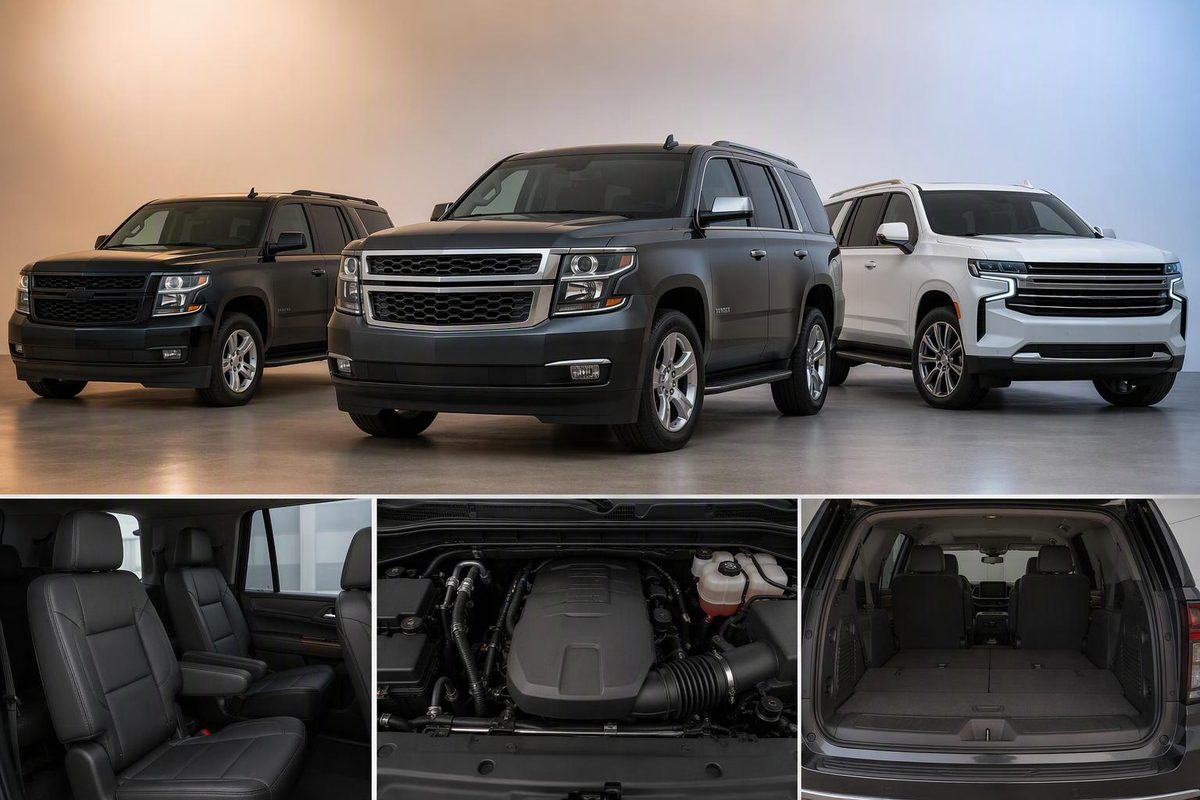
Compare 2019–2020 Tahoes with older budget picks and roomier 2022–2023 models, including engine risks, recall checks and equipment worth inspecting.
The best years for a used Chevy Tahoe shortlist are 2019–2020, starting with a 5.3L LS or LT. Consider a 2013–2014 non-hybrid 5.3L for an older budget alternative, or a 2006 if you are comfortable maintaining an aging SUV. For frequent third-row use, consider a 2022–2023 5.3L primarily for the newer generation’s passenger and cargo space—not proven superior reliability.
These are buying recommendations, not a measured ranking of failure rates. Submitted complaints do not establish reliability without accounting for vehicles sold, mileage and time on the road. A maintained Tahoe outside this shortlist can be a better purchase than a neglected one on it. The available evidence does not establish a failure-rate percentage for these choices.
Choose your main buying priority; the tool matches it to a Tahoe shortlist and inspection focus.
Tahoe Year Shortlist
Your Starting Point
2019–2020
Start with a 5.3L LS or LT.
Inspect AFM lifter symptoms and transmission operation. Verify that the third row is installed.
| Years | Start With | Best Fit |
|---|---|---|
| 2019–2020 | 5.3L LS/LT | Everyday use |
| 2013–2014 | Non-hybrid 5.3L | Older budget pick |
| 2006 | Original 4.8L/5.3L | Old-SUV ownership |
| 2022–2023 | 5.3L LS/LT | Third-row space |
Inspection Caveats for Each Choice
2019–2020: Applicable engines remain covered by GM’s AFM lifter diagnostic bulletin. The 2020 LS Custom and Custom Midnight editions delete the third row.
2013–2014: Later production does not eliminate oil-consumption risk. Third-row seats must be removed for maximum cargo space.
2006: Rust, brake and fuel lines, cooling-system condition and transmission operation can outweigh the model-year reputation.
2022–2023: This is a space-and-equipment recommendation, not proven reliability superiority. Check lifter symptoms and actual equipment, especially on 2022 vehicles.
Sources: CarGurus buying guide, Chevrolet equipment brochures, Edmunds 2006 specifications and GM bulletins cited in the article. Editorial shortlist; comparative failure rates are unknown.
2019–2020 Is the Best Starting Point
The late fourth-generation Tahoe offers a middle ground between the older trucks and the larger 2021-up design. CarGurus’ buying guide favors 2016-and-later fourth-generation models over 2015. Choosing 2019–2020 narrows that recommendation to the end of the generation; it does not establish that those two years have the lowest failure rate.
Start with the 5.3L LS or LT, choosing 2WD or 4WD according to your needs. In the 2020 Tahoe, the 355-hp 5.3L uses a six-speed automatic, while the optional 420-hp 6.2L uses a ten-speed automatic. Its third-row seats fold down rather than requiring removal, and Apple CarPlay and Android Auto compatibility are included. Chevrolet’s 2020 brochure documents those specifications and equipment differences.
For 2020, LT adds heated leather-appointed front seats, automatic emergency braking and a programmable power liftgate over LS. Premier adds Magnetic Ride Control. Inspect that system and obtain a repair estimate for any fault before paying a premium for the trim.
Check the actual seating layout before buying. LS Custom and Custom Midnight editions delete the third row. A listing that says “Tahoe LS” is not enough to establish that it has the seating you need.
A 2020 Tahoe Still Has AFM Lifter Risk
2020 is not an AFM-free year. GM bulletin 15-06-01-002L covers applicable 2015–2020 Tahoe 5.3L and 6.2L engines. It addresses ticking, misfires and P0300 that may result from collapsed or stuck Active Fuel Management lifters, locking-pin damage or bent pushrods. GM’s diagnostic bulletin documents possible faults, not their frequency.
Ask for a cold start and a scan rather than accepting “they all tick” as a diagnosis. If the vehicle has had lifter or other engine work, request the invoice showing what was repaired. The year recommendation does not replace an engine inspection or a cold-and-warm transmission road test.
2013–2014 Is the Older Budget Alternative
CarGurus considers the 2010–2014 Tahoe relatively trouble-free compared with 2007–2009. The 2013–2014 non-hybrid 5.3L models sit at the end of that generation and make a reasonable older shortlist.
Their third-row seats must be removed to access maximum cargo space. That is a meaningful ownership difference if you frequently alternate between carrying passengers and hauling bulky items: folding seats in the newer Tahoe avoid having to remove and store them.
Later production provides a reason to consider these years, but not to call them free of oil-consumption problems. GM’s oil-consumption bulletin identifies updated valve-cover and AFM-shield production breakpoints in 2011 and 2010, respectively. It still lists applicable 2007–2014 Tahoes. GM bulletin 10-06-01-008M explains the relevant causes and repairs.
Ask how much oil the owner adds between changes and whether any related repairs are documented. Do not assume a 2014 cannot consume oil simply because it was built late in the generation. These 5.3L models still have AFM; a seller’s claim that it has been removed needs documentation of the modification.
2006 Works for Buyers Prepared for Age-Related Repairs
CarGurus singles out 2006 as the most trouble-free second-generation year in its complaint-based assessment. That makes it worth considering, not an automatic winner over newer trucks.
Edmunds’ 2006 specifications list original 4.8L and 5.3L configurations with four-speed automatics. Verify what is actually installed in the vehicle, particularly if the seller describes an engine or transmission replacement.
A 2006 Tahoe is now roughly two decades old. Frame condition, brake and fuel lines, leaks, cooling-system condition and transmission operation can matter more than low mileage alone. A clean interior and a favorable model-year reputation do not settle those questions.
This is the shortlist choice for someone willing to maintain an old SUV, not someone expecting the lowest-maintenance purchase. Keep part of the budget available for repairs rather than spending it all on the vehicle. The draft evidence provides no repair-cost allowance that would apply to every 2006 Tahoe.
2022–2023 Makes Sense for Frequent Third-Row Use
Choose a 2022–2023 5.3L LS or LT when third-row usefulness matters more than finding the lowest purchase price. This recommendation is about the newer body’s space and equipment, not established long-term reliability superiority.
For 2022, Chevrolet lists 122.9 cu. ft. of maximum cargo volume with both rear rows folded and 10 inches more third-row legroom than the previous generation. The 5.3L uses Dynamic Fuel Management and a ten-speed automatic, and Chevy Safety Assist is standard. The 2022 brochure documents those figures and features.
Check the original window sticker and the actual vehicle’s equipment, especially on 2022 models. Chevrolet warns that supply shortages affected feature availability. Do not price a missing feature as though it were installed merely because a trim-level description includes it.
Newer 5.3L Engines Are Not Immune to Lifter Problems
The newer generation’s extra room does not eliminate engine inspection. GM’s cold-start ticking bulletin includes applicable Tahoe engines through 2023 and calls for checking bent pushrods or collapsed lifters when diagnosis isolates the concern.
That bulletin is not a failure-rate study. It establishes a diagnostic concern to check, not how likely a particular 2022 or 2023 Tahoe is to suffer it. Service records, a cold start and an independent inspection remain part of the purchase decision.
Earlier Years and Certain 6.2L Models Need Extra Caution
2007–2009 Needs a Closer Oil-Consumption Review
CarGurus advises against these years, and GM’s oil-consumption bulletin documents relevant causes and repairs for applicable vehicles. If you are shopping a 2007–2009 5.3L, make oil use and repair history central to the inspection rather than relying on the seller’s description of normal operation.
For the fourth generation, shop later years before 2015, consistent with the buying guide’s preference for 2016-and-later models. That is a shopping order, not a claim that every 2015 is defective.
Certain 2015–2018 Tahoes Have a Brake-Assist Recall
Recall 19V-645 addresses reduced vacuum brake assist and potentially increased stopping distance in certain 2015–2018 Tahoes. Check the VIN and completion records; the model-year range alone does not establish whether a vehicle is covered.
The remedy was a brake-control software update, not an automatic vacuum-pump replacement. GM’s recall filing documents the scope and remedy. Ask what work was actually performed rather than treating a generic “recalls done” statement as a repair record.
Newer 6.2L L87 Models Require a Separate Engine Review
Recall 25V-274 covers specified 2021–2024 6.2L L87 Tahoes within a suspect production window—not every Tahoe or other engine. Connecting-rod and crankshaft manufacturing defects can cause engine failure and loss of propulsion. GM’s recall filing defines the affected population.
As of October 1, 2026, a completed L87 recall does not settle the engine concern. NHTSA opened engineering analysis EA26005 on August 20, 2026, covering 2021–2026 GM models equipped with L87. It is investigating alleged post-remedy failures and failures in engines produced after the original recall window. NHTSA’s opening record describes that investigation.
An investigation is not itself a new recall, and allegations are not a measured failure rate. It nevertheless warrants extra caution when considering a newer 6.2L. The 5.3L shortlist should not be read as a blanket endorsement of every engine offered in the same model years.
Inspect the Specific Tahoe Before Paying for Its Reputation
Run the VIN through GM’s official recall lookup and request completion records, then arrange an independent pre-purchase inspection. Have the shop perform a cold start, a full-module scan and a transmission road test both cold and warm. Match service and major-repair claims to invoices.
Test front and rear climate controls, seat functions and any adaptive suspension equipment. On an older Tahoe, have the inspection address structural rust and brake and fuel-line condition. On a newer one, verify that the advertised seating and equipment are actually present.
If towing is part of the job, verify the exact engine, drivetrain, axle and trailering package rather than using the model year’s advertised maximum. Check the vehicle’s load label as well; our Tahoe payload guide explains why configuration matters.