
How Much Weight Can a 2024 Tahoe Actually Carry?
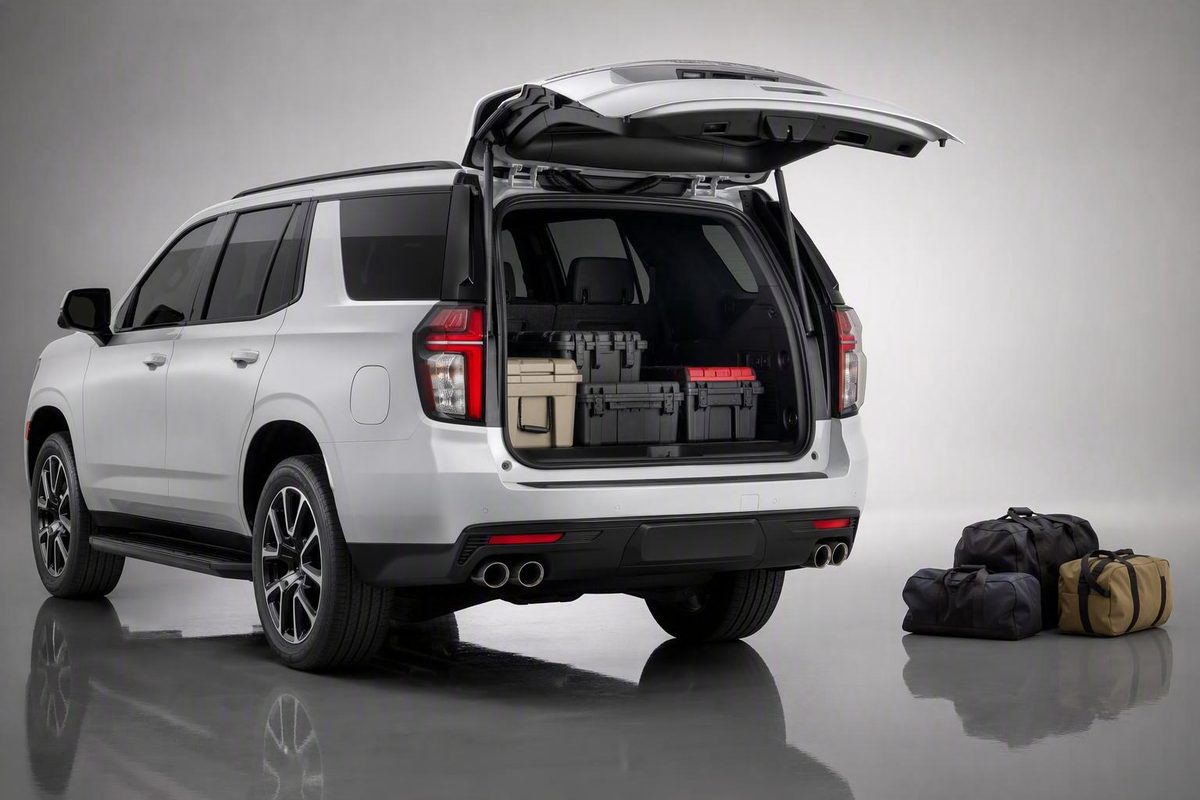
Online figures such as 1,834 or 2,017 lb help with comparison, but the exact Tahoe's label and official documents should guide the final load.
The short answer: reported payload ratings run from 1,616 to 2,017 pounds
There is no single, officially verified model-wide answer in the supplied evidence for the 2024 Chevrolet Tahoe payload capacity. Chevrolet dealership pages report payload ratings from 1,616 to 1,834 pounds, depending on engine and drivetrain, with the 5.3-liter V8 and 2WD receiving the highest dealer-reported figure of 1,834 pounds. Champion Chevrolet publishes all six of those engine-and-drivetrain ratings, but its article is dealership material rather than an official Chevrolet specification table.
A separate third-party specification conflicts with that range. Car and Driver lists a 2,017-pound maximum payload and a 2,016-pound as-specified payload for a selected 2024 Tahoe LS 2WD with the 5.3-liter V8. That is a configuration-specific listing, not a rating for every Tahoe. Car and Driver identifies the selected vehicle as a rear-wheel-drive 2024 Tahoe LS.
The published figures can therefore be summarized as follows:
- Commonly repeated dealer maximum: 1,834 pounds
- Configuration associated with that figure: 5.3L EcoTec3 V8 with 2WD
- Lowest figure in the six-combination dealer table: 1,616 pounds
- Configuration associated with that figure: 6.2L EcoTec3 V8 with 4WD
- Conflicting third-party maximum: 2,017 pounds
- Configuration associated with that figure: 2024 Tahoe LS 2WD with the 5.3L V8
Neither 1,834 pounds nor 2,017 pounds can be presented here as Chevrolet’s definitive maximum for the entire 2024 Tahoe lineup. The supplied evidence does not include an official Chevrolet payload table, ordering guide, owner’s manual passage, or VIN-specific manufacturer document that reconciles the two numbers.
This article should therefore be read as an analysis of conflicting published data—not as a replacement for official vehicle documentation.
Use online payload figures to identify configurations worth investigating. Before carrying a demanding load or towing, use the exact Tahoe’s label and its applicable official documentation rather than assuming that a generic maximum applies.
Dealer-reported payload ratings by engine and drivetrain
Several Chevrolet dealership articles reproduce the same six payload figures. They group the ratings by engine and drivetrain, resulting in a reported range of 1,616 to 1,834 pounds. The table below is useful for preliminary comparison, but it is not an official Chevrolet specification table.
Dealer-reported payload figures
| Engine | 2WD reported payload | 4WD reported payload | Difference with 4WD |
|---|---|---|---|
| 5.3L EcoTec3 V8 | 1,834 lb | 1,746 lb | 88 lb less |
| 6.2L EcoTec3 V8 | 1,671 lb | 1,616 lb | 55 lb less |
| 3.0L Duramax turbo-diesel | 1,717 lb | 1,625 lb | 92 lb less |
The complete set of figures appears on the Northside Chevrolet Tahoe capacity page. Within this dealer-reported table, the 5.3L 2WD has the highest figure at 1,834 pounds, and the 6.2L 4WD has the lowest at 1,616 pounds.
The table supports several limited comparisons:
- Every 2WD entry has a higher reported payload than the corresponding 4WD entry.
- The 5.3L V8 leads the table in both drivetrain columns.
- The engine with the greatest output does not receive the highest reported payload.
- The listed differences between corresponding 2WD and 4WD configurations range from 55 to 92 pounds.
Those observations apply only to the published dealership table. Its categories identify engine and drivetrain but do not account for trim, complete factory equipment, seating equipment, dealer-installed accessories, later modifications, or the measured weight of an individual vehicle.
Consequently, two Tahoes described broadly as “5.3L 4WD” should not automatically be assumed to have identical occupant-and-cargo allowances. The table does not establish that every vehicle sharing one of its six descriptions receives the corresponding figure.
The repetition of these numbers on multiple dealership sites also requires careful interpretation. Several pages may appear to corroborate one another, but the supplied pages do not identify an underlying Chevrolet document for the payload table. Repeated or syndicated marketing material is not the same as independent manufacturer confirmation.
The figures are most useful as a screening tool. For example:
- A payload-conscious shopper might begin by examining 5.3L 2WD vehicles because that configuration leads the dealer table.
- Someone who requires 4WD can expect the published comparison to show less payload than for the corresponding 2WD entry.
- A shopper comparing gasoline and diesel Tahoes can use the table to decide which individual vehicles merit a label check.
- An owner should not replace a lower vehicle-label allowance with a higher generic figure found online.
“Maximum payload” also needs a configuration qualifier. Even if a published maximum is correct for one qualifying Tahoe, it does not follow that every Tahoe—or every example with the same engine and drivetrain—can carry that amount.
Why some sources say 1,834 pounds and another says 2,017
The central discrepancy is between the dealer-reported 1,834-pound maximum and Car and Driver’s 2,017-pound maximum. Both are associated with a 5.3L, rear-wheel-drive or 2WD Tahoe, but the evidence does not show that the sources use the same trim, equipment assumptions, vehicle weight, or data methodology.
Published payload discrepancy
Detail Repeated dealership figure Car and Driver specification Vehicle description 5.3L V8, 2WD 2024 Tahoe LS 2WD, 5.3L V8 Maximum payload shown 1,834 lb 2,017 lb As-specified payload shown Not provided 2,016 lb GVWR shown Not provided 7,400 lb Curb weight shown Not provided 5,383 lb Source status Repeated dealer listing Configuration-specific third-party listing
For its selected LS 2WD, Car and Driver lists a 7,400-pound gross vehicle weight rating, 5,383-pound curb weight, 2,017-pound maximum payload, and 2,016-pound as-specified payload. The page identifies the vehicle as a 2024 Tahoe LS with rear-wheel drive and the 5.3L gasoline V8.
The two published maximums differ by:
2,017 − 1,834 = 183 pounds
A 183-pound discrepancy is substantial enough to affect a heavily occupied vehicle or a towing setup in which tongue weight uses part of the available occupant-and-cargo allowance. It cannot reasonably be explained as a simple rounding difference.
The supplied evidence does not establish the cause. Possibilities that would require further documentation include:
- Different trim or equipment assumptions
- Different definitions of the selected configuration
- Different curb-weight data or methodology
- Dealership material reused without model-year revalidation
- A database or publishing error
None of those explanations is proven by the evidence, so the discrepancy should remain unresolved rather than being assigned to one cause.
There are specific reasons to question whether the dealer figures were independently revalidated for 2024. Hamden Chevrolet displays the same payload values in its 2024 and 2022 sections. That does not prove that the numbers are incorrect, but it makes their model-year provenance uncertain. Classic Chevrolet likewise reproduces the 2024 figures found in its 2023 material.
Car and Driver’s page also has a presentation inconsistency. Its title metadata references a 2026 review, although the displayed specification is explicitly labeled as a 2024 Chevrolet Tahoe LS 2WD. The selected configuration is clear, but the mixed metadata is another reason not to elevate the page into an official, Tahoe-wide specification.
The arithmetic behind Car and Driver’s maximum is apparent:
7,400-pound GVWR − 5,383-pound curb weight = 2,017 pounds
That calculation explains how the displayed figures relate to one another. It does not establish that every Tahoe LS 2WD has a 2,017-pound occupant-and-cargo allowance. A published curb weight may not reflect all equipment installed on an individual vehicle, and the evidence does not include a corresponding tire-and-loading label from that selected Tahoe.
The responsible conclusion is not that one source has “won.” The 1,834-pound figure is the maximum repeated in several dealership tables, while 2,017 pounds is a third-party maximum attached to one selected LS 2WD specification. Without official configuration documentation or a label from the vehicle being evaluated, the disagreement remains open.
How drivetrain and vehicle weight affect available payload
Payload is not determined by horsepower or torque alone. It depends on the relationship between the weight the vehicle is permitted to reach and the weight already used by the configured vehicle itself. When a configuration weighs more without receiving a corresponding increase in its allowable total weight, less capacity remains for occupants and cargo.
That is why additional drivetrain hardware or equipment may matter. The precise effect, however, cannot be assigned without configuration-specific evidence. The supplied material does not support a fixed payload penalty for a roof, wheel choice, suspension system, seating arrangement, trim, or package.
Within the dealer-reported table, moving from 2WD to 4WD corresponds to:
- 5.3L V8: 1,834 pounds versus 1,746 pounds, or 88 pounds less
- 6.2L V8: 1,671 pounds versus 1,616 pounds, or 55 pounds less
- 3.0L diesel: 1,717 pounds versus 1,625 pounds, or 92 pounds less
Every 2WD entry in that table has a higher listed payload than its corresponding 4WD entry. These comparisons come from dealer-published data and should not be converted into a universal rule for every individual Tahoe.
The 6.2L V8 also demonstrates why engine output cannot be used as a payload shortcut. It is listed at 420 horsepower and 460 lb-ft of torque, but it does not lead the payload table; the 5.3L V8 receives the higher payload figure with either drivetrain in the Champion Chevrolet engine and payload comparison.
That does not prove that greater engine output inherently reduces payload. It shows only that payload rankings cannot be inferred from engine power. Engine, drivetrain, trim, equipment, and applicable vehicle ratings operate as a complete configuration.
Installed equipment can also affect the vehicle’s own weight, but the evidence does not quantify the effect of any individual feature. It would therefore be unsupported to say that a particular wheel, roof, seating system, suspension option, or trailering package reduces—or increases—payload by a stated amount.
Owner discussions can help identify questions to ask, but they cannot supply official ratings. Participants in a Tahoe and Yukon forum describe variation among vehicles and raise concerns about the weight of options. The available posts do not consistently provide readable labels, VINs, complete configurations, or enough comparable 2024 Tahoes to establish a dependable numerical range.
The practical takeaway is limited but useful: when two inventory listings look similar, compare the labels on both vehicles rather than assuming their occupant-and-cargo limits match.
How to find the payload limit for a specific Tahoe
For a specific Tahoe, inspect the Tire and Loading Information label in the driver-door or door-jamb area. Look for the statement giving the combined weight limit for occupants and cargo, and record that value exactly as printed.
Do not confuse that statement with the separate certification label. The certification label contains other vehicle-rating information, including gross vehicle and axle ratings, while the tire-and-loading label is the primary place to look for the printed combined occupant-and-cargo limit.
The supplied evidence does not include an official Chevrolet instruction explaining these labels. It does, however, consistently caution that broad online figures cannot substitute for vehicle-specific documentation, and the available owner discussion emphasizes checking the label on the actual vehicle. Owners should consult the Tahoe’s official documentation for interpretation and any additional loading requirements.
A basic vehicle-check process is:
- Open the driver’s door.
- Locate the Tire and Loading Information label.
- Find the combined occupant-and-cargo statement.
- Photograph or record the number.
- Use that value as the starting point for the proposed load.
- Consult the vehicle’s official documentation for other applicable requirements.
When shopping, request a clear photograph of the label from the exact vehicle under consideration. A stock photograph, a label from another Tahoe, or a copied inventory specification does not establish the allowance for that vehicle.
This is especially important for remote purchases. A listing such as “2024 Tahoe LS 4WD” identifies a broad configuration, but the evidence does not show that every LS 4WD has the same label value. If payload is central to the purchase, compare label photographs alongside equipment lists and other vehicle-specific information.
Before estimating the load, record:
- The exact combined occupant-and-cargo allowance
- The expected driver and passengers
- Luggage and other carried items
- Equipment carried inside or on the vehicle
- Dealer-installed, aftermarket, or later-added equipment not already reflected in the labeled vehicle configuration
- Trailer tongue weight imposed on the vehicle, when towing
The separate equipment line in a worksheet is for weight added later or otherwise not reflected in that starting value.
Online ratings remain helpful in the early shopping stage. They can identify potentially favorable engine-and-drivetrain combinations, but they should not be used to increase a lower allowance printed on the vehicle.
Forum participants report variation among vehicles, yet the anecdotes supplied here are not complete enough to establish a reliable real-world range. Their value is in reinforcing the need for vehicle-level verification, not in proving a rating for similarly equipped Tahoes.
If a label cannot be read or its meaning is uncertain, do not replace it with the highest number found online. Obtain and follow official, vehicle-specific guidance before relying on the Tahoe for a demanding load.
Calculate remaining payload for passengers, cargo, and tongue weight
Payload is shared by the people and items carried in or on the Tahoe. It is not a cargo-only allowance. Occupants, luggage, carried equipment, later-added accessories, and trailer tongue weight can all use part of the available capacity.
A practical planning worksheet is:
Vehicle-label occupant-and-cargo limit − occupants − cargo and carried equipment − dealer-installed, aftermarket, or later-added equipment not reflected in the label value − trailer tongue weight = estimated remaining payload
Do not subtract factory-installed equipment twice. If equipment was already part of the vehicle when its printed allowance was established, its weight is reflected in that starting allowance. The separate deduction is intended for added weight that the label does not already account for.
Consider a hypothetical Tahoe with a label allowing 1,700 pounds of combined occupants and cargo. The following numbers are an illustration only; they are not a recommended load and do not describe a specific vehicle.
| Load item | Calculation | Estimated payload remaining |
|---|---|---|
| Starting label allowance | 1,700 lb | 1,700 lb |
| Occupants | −600 lb | 1,100 lb |
| Luggage and cargo | −250 lb | 850 lb |
| Trailer tongue weight | −700 lb | 150 lb |
After subtracting 600 pounds of occupants and 250 pounds of luggage, the example leaves 850 pounds before tongue weight or other uncounted additions. Subtracting 700 pounds of trailer tongue weight leaves an estimated 150 pounds.
The calculation demonstrates how quickly an apparently substantial allowance can be consumed. It does not establish that the resulting combination complies with every requirement that may apply. Official vehicle and towing documentation must still be consulted.
Use realistic weights rather than estimates chosen to make the total fit. Include everyone expected to travel and the items likely to remain in the vehicle.
The starting value is crucial. If an individual Tahoe’s label says 1,700 pounds, beginning with an online maximum of 1,834 or 2,017 pounds would create capacity that the vehicle’s label does not provide. Using 2,017 pounds instead of 1,700 pounds would overstate the starting allowance by 317 pounds.
Recalculate when the setup changes. Another passenger, additional supplies, newly installed equipment, or a change in the trailer’s loaded condition can reduce the remaining allowance. A calculation prepared for one trip should not automatically be reused for another.
The available evidence does not prescribe a particular reserve margin. Nevertheless, a plan that depends on using every calculated pound leaves no room for inaccurate estimates or an overlooked item. The relevant official documentation should govern the final loading decision.
Payload capacity is not towing capacity
Payload and towing capacity describe different constraints.
Payload concerns weight carried by the Tahoe, including occupants, cargo, carried equipment, added accessories, and the portion of trailer weight imposed through the hitch.
The applicable rating depends on the vehicle’s configuration and any required equipment.
Dealership and third-party sources report a maximum properly equipped towing capacity of 8,400 pounds for qualifying 2024 Tahoe configurations. Macke Motors identifies 8,400 pounds as the configuration-dependent maximum. That is a towing figure, not permission to carry 8,400 pounds in or on the Tahoe.
The distinction matters because a trailer affects both calculations. Passengers and cargo use that same allowance.
A Tahoe can therefore be below a quoted trailer-weight maximum while exceeding its occupant-and-cargo limit. In the earlier illustration, 600 pounds of occupants, 250 pounds of luggage, and 700 pounds of tongue weight use 1,550 pounds of a hypothetical 1,700-pound allowance. The fact that the trailer might be below a published towing maximum would not change that payload calculation.
The reverse is also true: remaining payload alone does not prove that a trailer satisfies the applicable towing requirements. Both constraints must be evaluated using documentation appropriate to the exact vehicle and equipment.
The supplied sources associate maximum towing capacity with proper equipment. They do not establish that the Max Trailering Package raises payload capacity. A package may be relevant to a particular towing rating without increasing the combined occupant-and-cargo allowance printed on the vehicle.
For towing, the essential comparison is between:
- The exact Tahoe’s labeled occupant-and-cargo allowance
- The proposed occupants and cargo
- Added equipment not already reflected in the label value
- The trailer’s loaded tongue weight
- The applicable configuration-specific towing documentation
Official vehicle documentation may identify further requirements. Because those details are not supplied in the evidence pack, they should not be inferred from the generic payload or towing figures discussed here.
Choosing a Tahoe configuration for hauling or towing
For preliminary payload research, the 5.3L V8 with 2WD is the strongest starting point in the six-combination dealership table. Its reported 1,834-pound payload is higher than the other five dealer-listed figures, including the diesel 2WD at 1,717 pounds and the 6.2L 2WD at 1,671 pounds. The table remains third-party dealership material rather than an official Chevrolet specification.
Car and Driver’s separate 2,017-pound maximum for a selected 2024 LS 2WD makes that configuration worth investigating, but the evidence does not include a corresponding vehicle-label photograph. A shopper should not build a purchase plan around that figure unless the actual vehicle and its official documentation support the intended load.
The dealership comparison also shows a drivetrain trade-off. Depending on the engine, its 2WD entries retain 55 to 92 pounds more listed payload than the corresponding 4WD entries. Those are table-based comparisons, not guaranteed differences between every pair of real vehicles.
Payload is only one consideration in choosing a drivetrain. A buyer may need 4WD for the intended operating conditions. The point is not that 2WD is universally preferable; it is that drivetrain needs and payload needs should be evaluated together.
Do not assume that a larger engine, more expensive trim, or trailering package automatically increases payload. Added equipment can affect the vehicle’s weight, and the evidence does not assign a payload benefit to any particular trim, option, or package.
Before buying, create a representative load estimate. Include:
- Every expected occupant
- Recurring cargo and carried equipment
- Dealer-installed or aftermarket additions not reflected in the label
- Realistic loaded trailer tongue weight, if applicable
- The need for 2WD or 4WD
Then request label photographs from actual candidate vehicles and compare the printed allowances with the same proposed load. Northside Chevrolet’s table can guide the preliminary engine-and-drivetrain comparison, but the final calculation should use the individual Tahoe’s information.
Payload-conscious purchase checklist
- [ ] Exact occupant-and-cargo allowance from the Tire and Loading Information label
- [ ] Expected driver and passenger weight
- [ ] Child seats, pet equipment, or other recurring carried items
- [ ] Typical luggage, tools, supplies, and exterior cargo
- [ ] Dealer-installed, aftermarket, or later-added equipment not reflected in the label value
- [ ] Realistic loaded trailer tongue weight
- [ ] Need for 2WD or 4WD
- [ ] Configuration-specific towing documentation
- [ ] Any equipment required for the intended towing rating
- [ ] Enough unused capacity to avoid depending on optimistic estimates
The useful answer is configuration-specific. The most commonly repeated dealership maximum is 1,834 pounds, while a third-party specification lists 2,017 pounds for a selected LS 2WD. Compare those figures during research, but base the final passenger, cargo, and trailer calculation on the exact Tahoe’s label and applicable official documentation.
What is the maximum payload capacity of a 2024 Chevrolet Tahoe?
Chevrolet dealership pages commonly report a maximum of 1,834 pounds for the 5.3L V8 with 2WD. Car and Driver separately lists 2,017 pounds for a selected 2024 Tahoe LS 2WD with the 5.3L V8. The published figures differ by 183 pounds, and the supplied evidence contains no official Chevrolet table that resolves the discrepancy. Classic Chevrolet reproduces the 1,616-to-1,834-pound dealer range.
Neither maximum should be applied across the entire lineup. Use the combined occupant-and-cargo allowance printed on the specific Tahoe’s Tire and Loading Information label.
How much payload does a 4WD Tahoe lose compared with 2WD?
In the dealer-reported table, 4WD has:
- 88 pounds less with the 5.3L V8
- 55 pounds less with the 6.2L V8
- 92 pounds less with the 3.0L diesel
These are differences between published dealership figures, not guaranteed penalties for every individual Tahoe. A specific vehicle’s equipment and weight may produce a different label allowance.
Does the Max Trailering Package increase the Tahoe’s payload capacity?
The supplied evidence does not establish that the Max Trailering Package increases payload. Dealership material associates required trailering equipment with applicable towing ratings, but that is different from increasing the vehicle’s occupant-and-cargo allowance.
Do not add an assumed payload benefit for the package. Check the exact Tahoe’s label and its official configuration-specific documentation.
Do passengers and trailer tongue weight count against payload?
Yes. Passengers, cargo, carried equipment, added accessories, and trailer tongue weight can all use part of the Tahoe’s payload allowance.
Start with the combined occupant-and-cargo limit on the vehicle’s Tire and Loading Information label, then subtract the actual load. Equipment already reflected in the labeled vehicle configuration should not be deducted twice.
Where can I find the exact payload rating for my 2024 Tahoe?
Look for the combined occupant-and-cargo statement on the Tire and Loading Information label in the driver-door or door-jamb area. The separate certification label provides other vehicle-rating information and should not be treated as interchangeable with the tire-and-loading label.
If you are shopping, request a readable label photograph from the exact vehicle. Online figures such as 1,834 or 2,017 pounds are useful for preliminary comparison, but the vehicle-specific label and official documentation are the relevant sources for the final loading decision.