
What to Do When an L87 Fails After Recall Service
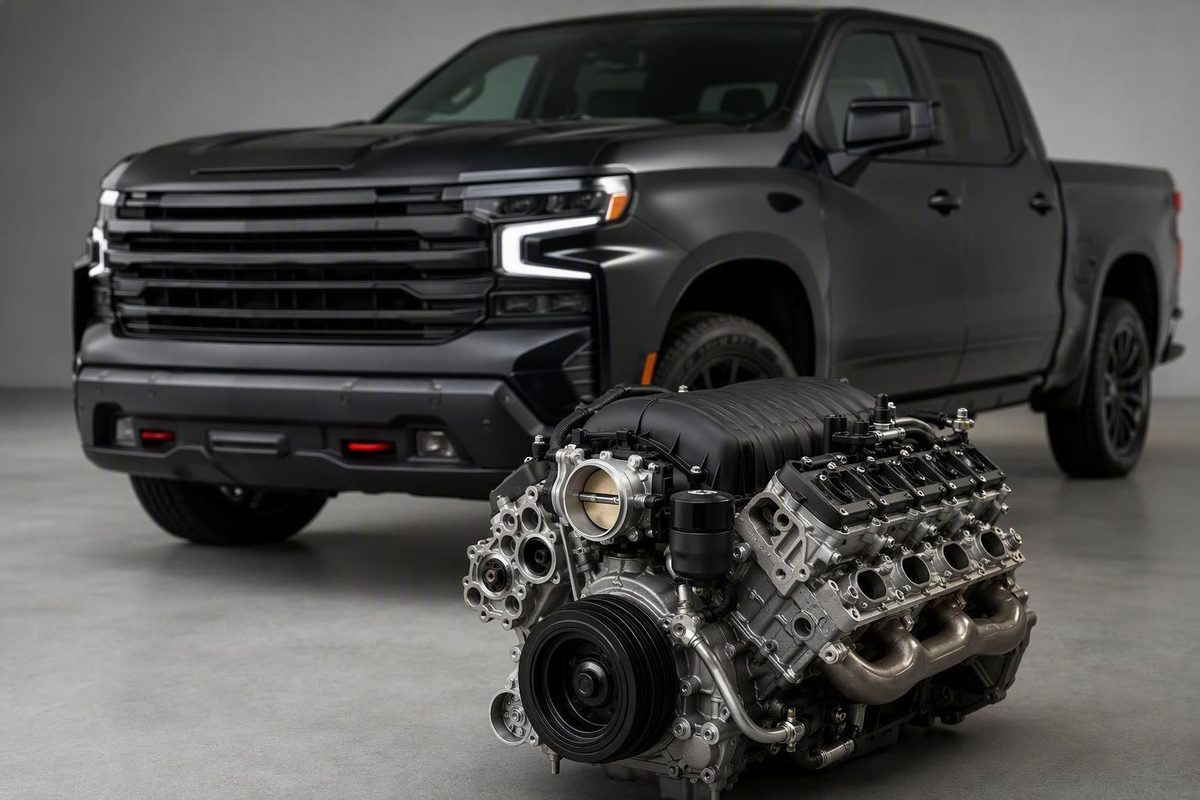
Check whether your L87 falls within Recall 25V-274 or EA26005, then document the repair, repeat failure, dealer diagnosis, and safety complaint.
Yes, a 6.2-liter L87 can fail after Recall 25V-274 service. Reports cover both engines that passed inspection and received the 0W-40 procedure and engines replaced under the recall. If yours failed, stop driving when safe, tow it, retrieve the recall repair order, demand a written component-level diagnosis, preserve the engine and service evidence, open a GM case, and file a NHTSA safety complaint.
Select the vehicle, engine build month, and remedy; then print the evidence checklist.
This screens the published model, model-year, engine-production, and investigation parameters. Recall eligibility remains VIN-specific.
Published Scope Matrix
More Columns
| Vehicle | 25V-274 Reported Application | EA26005 Expanded Scope In Brief | Required Engine |
|---|---|---|---|
| Chevrolet Silverado 1500 | Yes, qualifying 2021-2024 vehicles | 2021-2026 | 6.2L L87 |
| Chevrolet Tahoe | Yes, qualifying 2021-2024 vehicles | 2021-2026 | 6.2L L87 |
| Chevrolet Suburban | Yes, qualifying 2021-2024 vehicles | 2021-2026 | 6.2L L87 |
| GMC Sierra 1500 | Yes, qualifying 2021-2024 vehicles | — | 6.2L L87 |
| GMC Yukon | Yes, qualifying 2021-2024 vehicles | — | 6.2L L87 |
| GMC Yukon XL | Yes, qualifying 2021-2024 vehicles | — | 6.2L L87 |
| Cadillac Escalade | Yes, qualifying 2021-2024 vehicles | — | 6.2L L87 |
| Cadillac Escalade ESV | Yes, qualifying 2021-2024 vehicles | — | 6.2L L87 |
Post-Failure Evidence Checklist
Sources: Recall 25V-274 reporting and NHTSA EA26005 scope described in the article. Figures shown are published parameters, not a VIN eligibility determination or failure-rate estimate.
Federal Investigators Are Reviewing Both Remedy Paths
On August 20, 2026, NHTSA closed Recall Query RQ26001 and opened Engineering Analysis EA26005. The escalation broadened scrutiny beyond the original recall’s March 2021 through May 2024 L87 engine-production window to reported failures involving 2021-2026 Chevrolet Silverado 1500, Tahoe, and Suburban vehicles.
As of that date, the Office of Defects Investigation had received 499 allegations of post-remedy engine failure: 473 after the oil-related remedy and 26 involving replacement engines. GM also reported 6,953 post-remedy failures to investigators. Car and Driver reported the dated allegation totals and expanded investigation scope.
These numbers are not failure rates. The available evidence does not state how many vehicles completed each remedy, how many miles they accumulated afterward, or how many reported failures investigators have confirmed as resulting from the recalled manufacturing conditions. The 473-to-26 split cannot show which remedy has the lower failure rate without the number of vehicles exposed to each remedy.
The dated ODI allegation counts are snapshots, not separate groups:
| Date Or Stage | Reported Allegations |
|---|---|
| RQ26001 opening, January 2026 | 36 |
| February 17, 2026 | 139 |
| EA26005 opening, August 20, 2026 | 499 |
Do not add them together. The later totals encompass the developing inquiry, although the supplied evidence does not explain how every submission was screened or deduplicated.
An Engineering Analysis is not a finding that every recall repair is defective. It means NHTSA is examining remedy adequacy, later failures, and the wider population. A failure occurring after service establishes timing, not mechanical cause.
Recall 25V-274 Used Inspection, Oil, Or Engine Replacement
Recall 25V-274 addressed manufacturing conditions associated with connecting-rod-bearing damage and engine failure. Reported conditions included sediment on connecting rods or in crankshaft oil galleries and crankshafts with dimensions or surface finish outside specification. The resulting damage could cause catastrophic engine failure and loss of propulsion.
GM’s April 2025 recall was reported as covering 597,630 U.S. trucks and SUVs. The remedy began with a dealer inspection and divided vehicles into two branches:
- An engine that failed the prescribed inspection was replaced.
- An engine that passed received 0W-40 oil in place of 0W-20, along with the corresponding oil filter, oil-fill cap, and updated owner documentation.
Yahoo Autos summarizes the defect findings, recall population, and two remedy branches.
Diagnostic trouble code P0016 was reportedly one item checked during the inspection. It was not the entire test. Its absence did not guarantee that an engine would remain trouble-free, and its presence alone did not provide a complete bearing diagnosis.
The stated rationale for 0W-40 is that higher viscosity can improve oil-film separation and reduce metal-to-metal contact under otherwise comparable conditions. That does not mean thicker oil removes manufacturing debris, corrects an out-of-specification crankshaft, reverses existing bearing damage, or guarantees that an engine will not fail.
The same distinction applies to the inspection. Passing indicates that the engine met the prescribed criteria at that time. It does not prove that later failure is impossible. Reports of later failures, however, do not by themselves prove that the inspection is ineffective across the recall population.
Replacement-engine allegations also require individual diagnosis. The 26 reported cases are enough to warrant investigation but do not establish a replacement-engine failure rate or prove that each unit had the original contamination, crankshaft, or bearing condition. GM reportedly said recall replacements could be new or remanufactured, so the identity and provenance of the installed unit matter.
Recall Eligibility And EA26005 Scope Are Different
Recall 25V-274 reportedly covered qualifying 2021-2024 vehicles with L87 engines produced from March 1, 2021, through May 31, 2024. Reported applications include L87-equipped versions of the Chevrolet Silverado 1500, Tahoe and Suburban; GMC Sierra 1500, Yukon and Yukon XL; and Cadillac Escalade and Escalade ESV.
Those model years, names, and production dates do not establish eligibility. Recall status is VIN-specific. Use NHTSA’s recall-search page and ask a GM dealer to check open and completed campaigns in the warranty system.
The engine-production date also is not necessarily the vehicle date printed on the driver-door label. If the engine build date is unknown, ask the dealer whether it can be identified from the VIN, engine record, or campaign history.
EA26005 is broader than the original recall. Based on the announced scope, it includes 2021-2026 Chevrolet Silverado 1500, Tahoe, and Suburban vehicles under examination for L87 failures. A later-production vehicle can therefore be inside the Engineering Analysis while remaining outside Recall 25V-274 and ineligible for that campaign’s remedy.
Conversely, reported recall applications include GMC and Cadillac vehicles that are not among the three Chevrolet lines identified in the supplied expanded-scope summary. Owners should rely on the current federal file and VIN-specific records rather than assuming that every regulatory population is identical.
The approximately 597,630-vehicle recall population and estimates approaching one million vehicles under broader federal scrutiny are not interchangeable. One is a campaign population; the other concerns an investigative scope.
The Recall Repair Order Establishes Which Fix You Received
Ask the servicing dealer for the complete campaign repair order and GM warranty transaction history. A receipt that merely says “oil change” is not enough. The records should show:
- VIN, campaign number, completion date, and mileage
- Whether the engine passed or failed inspection
- Diagnostic trouble codes recorded
- Oil grade and quantity installed
- Oil-filter and oil-fill-cap part information
- Owner-documentation update
- Replacement-engine part number and identifier, if applicable
- Installation mileage and warranty authorization
Photograph the oil-fill cap currently on the engine. Keep that image with the repair order and subsequent oil-change receipts. If the cap, invoice, and stated oil specification conflict, ask the dealer to reconcile the discrepancy in writing rather than changing the record yourself.
For a replacement engine, request its part number, serial number or other identifier, new or remanufactured status, installation date and mileage, included and reused components, installed oil specification, and written parts-and-labor warranty. Also ask when the warranty started and whether its mileage basis follows the vehicle, installation, or another term.
Descriptions such as “crate motor” or “new engine” are not adequate documentation. If a replacement has failed, obtain identifying information for both the failed replacement and the next proposed unit.
Stop Driving For Knocking, Oil-Pressure Warnings, Or Power Loss
Reported warning signs associated with L87 bearing or lower-engine trouble include lower-engine knocking or tapping, low or fluctuating oil pressure, an oil-pressure warning, metal in drained oil or the filter, new vibration, rough operation, reduced power, P0016, stalling, seizure, and complete loss of propulsion.
These symptoms are not unique to the recalled condition and cannot identify the failed component by themselves. They do justify caution because the underlying recall concerns can lead to sudden engine failure.
If the engine is actively knocking, shows an oil-pressure warning, stalls, loses power, or has visible metal in the oil or filter, stop when it is safe and arrange towing. Do not continue driving to the dealer merely because the engine still runs.
Record the mileage, road speed, traffic conditions, engine load, towing status, approximate trailer weight, warning messages, sounds, vibration, smoke or odors, and the order in which symptoms appeared. Note whether the engine restarted, seized, or caused a loss of propulsion. Photograph the instrument panel only while safely stopped.
Before teardown or replacement, ask the facility to document scan results, dashboard warnings, oil and filter findings, visible debris, bearing observations, crankshaft observations, and removed components. Warranty rules may require parts to be returned. If so, ask the repair order to state what was observed and where the parts were sent.
Demand A Component-Level Diagnosis
“Needs engine” identifies the proposed repair, not the cause. Ask the dealer to provide a written diagnosis covering:
- Diagnostic trouble codes
- Failed or damaged components
- Metal, sediment, or filter findings
- Bearing condition
- Crankshaft condition, if inspected
- Oil level and specification found
- Whether the engine was seized
- Whether loss of propulsion occurred
- Whether GM considers the failure related to Recall 25V-274
- The coverage or authorization code used to approve or deny repair
If teardown is not authorized, have the dealer record that limitation. Do not fill the gap with your own conclusion. A factual record that separates observed damage from an unconfirmed cause is more useful to GM and NHTSA.
Maintain one dated file containing recall notices, repair orders, maintenance receipts, oil and filter receipts, scan reports, tow bills, rental receipts, photographs, videos, estimates, coverage decisions, emails, text messages, and notes from telephone calls. Keep your own notes clearly separate from dealer findings.
Ask Separately About Recall, Warranty, And Special Coverage
Recall eligibility, replacement-engine warranty, towing, rental transportation, goodwill assistance, and special coverage may have different rules. Ask the dealer and GM to answer each question separately in writing.
Secondary reporting describes Special Coverage N252494003 as potentially applying to qualifying failures for 10 years or 150,000 miles from the original in-service date, whichever comes first. That is not a promise that a particular failure will be paid. Eligibility depends on the VIN, diagnosis, dates, mileage, program terms, and GM’s determination.
Ask whether the special coverage is attached to the VIN and whether the diagnosed failure qualifies. If a replacement engine failed, ask which written parts-and-labor warranty applies and what repeat-repair authorization GM issued. Confirm towing and rental approval before assuming those costs will be reimbursed.
Open a GM customer-assistance case and retain the case number. Give the representative a short chronology containing the VIN, current mileage, recall completion date, remedy branch, failure date, symptoms, dealer location, and written diagnosis. Record representative names, contact dates, promised follow-up, and requested documents.
File A Detailed NHTSA Safety Complaint
A post-remedy failure involving stalling, seizure, or loss of propulsion is directly relevant to the federal review. NHTSA’s safety-problem page provides the complaint route.
Include the exact model, VIN, L87 engine, recall number, recall completion date and mileage, remedy branch, failure date and mileage, elapsed time or mileage since service, warning signs, road speed, towing status, dealer diagnosis, GM case number, and replacement-engine details. State whether the vehicle stalled or lost propulsion.
Use a factual chronology. If the root cause has not been established, say so. Attach or identify repair orders, photographs, videos, tow records, and scan results where the complaint system permits.
Filing a complaint does not guarantee reimbursement, another engine, rental coverage, or a buyback. It creates a federal safety record that investigators can compare with dealer and manufacturer data.
What Remains Unresolved
Investigators have not published failure rates for either remedy branch. The supplied evidence also does not establish how many allegations represent unique vehicles, how many failures share the recalled physical cause, how effectively the inspection detects developing damage, why the reported replacement engines failed, or whether later-production engines have the same defect mechanism.
EA26005 could lead to a revised remedy, wider recall, additional data collection, another manufacturer action, or no broader action after evaluation. None of those outcomes is assured.
Until NHTSA reaches findings, the defensible owner response is documentation rather than prediction: verify the VIN, identify the exact remedy, preserve the oil-cap and maintenance evidence, obtain the mechanical diagnosis, record replacement-engine identifiers, and submit the failure history to GM and NHTSA.