
Why Shift Problems Cannot Diagnose a Restricted Filter
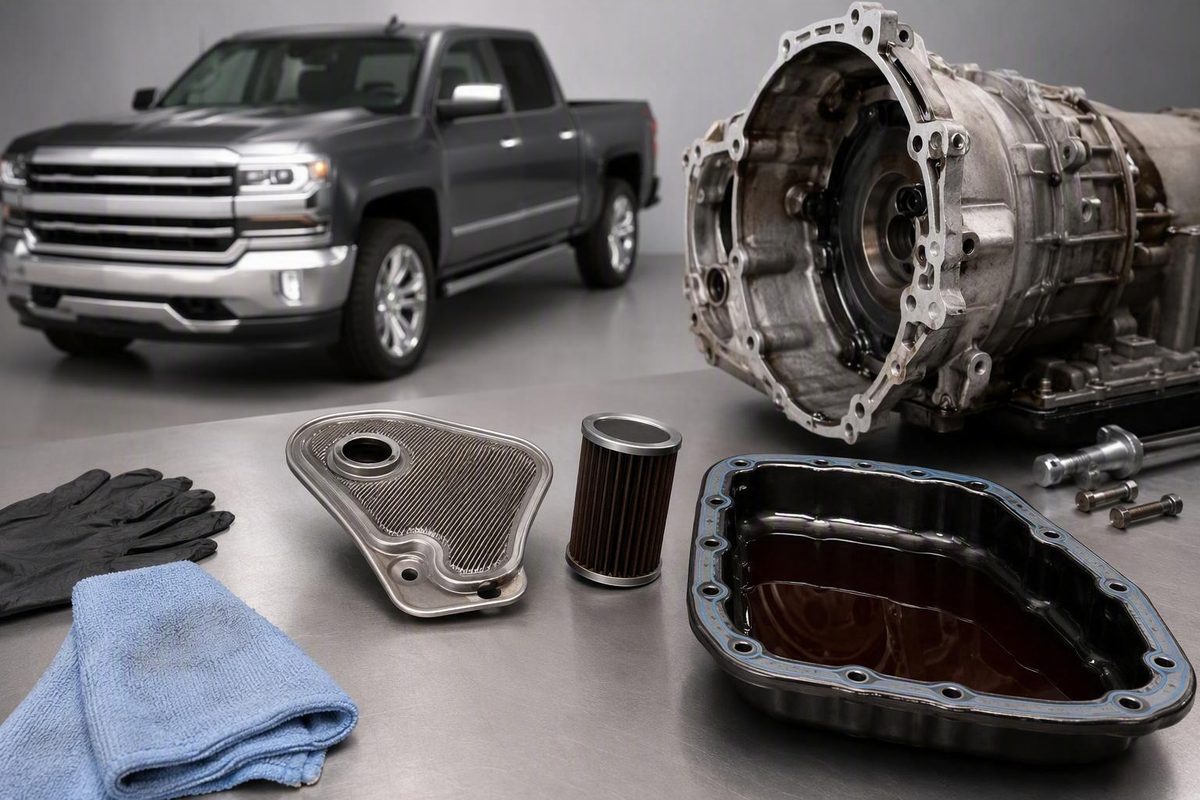
Delayed engagement, slipping, harsh shifts, noise, and vibration do not prove restriction; use codes, leak checks, and exact fluid checks to narrow the cause.
Delayed engagement, slipping, soft or harsh shifts, unusual noise, and vibration justify investigating an automatic transmission, but they do not prove that its filter is clogged. The available manufacturer guidance treats these complaints as observations requiring diagnosis; it does not identify filter-specific symptoms or provide a test that confirms filter restriction. Before authorizing filter replacement, document the complaint, scan for codes, inspect for leaks, and check fluid level and condition using the exact manufacturer procedure.
The short answer: symptoms cannot confirm a clogged filter
Commonly cited “clogged transmission filter symptoms” overlap with many transmission faults. Driving behavior alone cannot distinguish a restricted filter from incorrect fluid level, an electronic or solenoid fault, an adaptation issue, a selector-linkage problem, a pump or valve-body fault, or internal wear.
Use each symptom to create a diagnostic record rather than select a repair:
| Complaint | What to document | Why it is inconclusive |
|---|---|---|
| Delayed engagement | Drive, Reverse, or both; cold or warm operation; approximate delay | Fluid level, temperature, linkage, adaptation, hydraulic, and internal faults can overlap |
| Slipping | Gear or shift involved, speed, throttle or load, fluid temperature, warning lights | The sensation does not identify the affected component or underlying cause |
| Soft or flared shift | Starting and ending gear, engine-speed change, load, temperature | A soft or flared shift does not establish its cause |
| Harsh shift or engagement | Gear change, temperature, warning lights, recent repairs or battery service | Electronic pressure commands and adaptation issues can resemble mechanical trouble |
| Noise or vibration | Vehicle speed, engine rpm, selected gear, acceleration or coast, temperature | The source may be inside or outside the transmission |
Patterns provide useful distinctions. A delay limited to the first cold selection of Reverse is different from delayed engagement in both Drive and Reverse after warm-up. Slipping under heavy acceleration is also different from a single flare during one upshift.
Record whether the complaint began after transmission work, programming, battery disconnection, or a fluid leak. Note warning lights and messages as well. These details help determine which tests are appropriate, but they do not establish that the filter needs replacement.
Problems that can mimic filter restriction
Some electrical default conditions can command high line pressure and cause harsh engagement, so harshness is not automatically evidence of a mechanical restriction.
GM documents these alternatives in a diagnostic bulletin for certain low-mileage 9T45, 9T50, and 9T60 transmissions with current or history codes related to control solenoids or valves. The bulletin covers listed 2021–2024 Buick, Cadillac, Chevrolet, and GMC vehicles with fewer than 12,000 miles; the listed Chevrolet applications include certain Blazer, Malibu, and Trailblazer configurations. It does not establish clogged-filter symptoms or identify filter restriction as the cause of the covered complaints (GM bulletin 21-NA-169).
Diagnostic codes also require interpretation.
For Chevrolet truck and SUV owners, the practical rule is to use service information for the exact model year, powertrain, transmission code, and, when required, VIN. Criteria written for a listed Blazer or Trailblazer transmission should not be transferred to a Silverado, Tahoe, Suburban, Colorado, or another transmission without manufacturer documentation establishing that they apply.
A safe diagnostic sequence before replacing the filter
Work from recorded observations toward vehicle-specific tests:
- Record the exact complaint. Note Drive or Reverse engagement, the affected shift, speed, engine load, cold or warm operation, warning lights, noise, and vibration.
- Scan all relevant modules. Save current and history codes and identify which module reported each one.
- Inspect for leaks. Check for evidence of fluid loss around the transmission, cooler lines, connections, seals, and the vehicle’s parking area.
- Verify fluid level correctly. Follow the manufacturer’s procedure for the exact transmission. Fluid temperature, engine state, selector sequence, and vehicle position may be part of that procedure.
- Inspect fluid condition. Record color, transparency, odor, fine residue, gritty contamination, and larger debris. Do not use color alone to diagnose the filter.
- Obtain vehicle-specific testing. If the cause remains unclear, the next steps may include Drive and Reverse engagement observations, a controlled road test, and line-pressure testing with the specified equipment and criteria.
Both underfilling and overfilling matter. In the GM applications covered by the bulletin, insufficient fluid can result in premature wear or damage, while excess fluid can cause vent discharge, foaming, or pump cavitation. That does not create a universal hot-versus-cold checking rule: the correct conditions must come from service information for the vehicle being tested.
Before approving filter service, ask the shop to verify the transmission’s filter arrangement and applicable service procedure. A Chevrolet model name alone is not enough to determine the fitted transmission or service method.
What transmission fluid condition can tell you
Fluid inspection can reveal findings that warrant deeper diagnosis, but it cannot confirm a clogged filter. For its narrowly covered applications, the GM bulletin describes transparent red or brown fluid as acceptable, allows for a small amount of friction material or fine silver manufacturing residue, and associates black or burnt fluid with clutch damage and gritty or large metal debris with internal hardware damage (GM bulletin 21-NA-169).
| Fluid observation | What it may mean | Sensible next step |
|---|---|---|
| Transparent red or brown | Acceptable appearance in the covered GM applications | Confirm level and continue diagnosis |
| Limited fine friction material or silver residue | May be normal in those limited low-mileage applications | Compare the amount with model-specific guidance |
| Black or nontransparent fluid | Possible internal clutch damage | Arrange further diagnosis rather than assuming routine service |
| Burnt odor | Possible damaged friction components | Determine the internal cause before promising a repair |
| Gritty or sandy contamination | Possible internal hardware damage | Obtain prompt professional assessment |
| Large metal pieces | Finding consistent with significant hardware damage | Have the transmission professionally evaluated |
These interpretations are application-specific. A limited amount of fine residue described as normal in the covered low-mileage transmissions should not be generalized to every transmission or every amount of debris.
Severe discoloration, a burnt odor, gritty contamination, or substantial metal pieces also should not be presented as a maintenance issue that filter replacement is expected to correct. Those observations do not identify the damaged component or establish whether the clutches, pump, valve body, bearings, or other hardware remain serviceable.
When professional testing is the next step
Prompt professional evaluation is appropriate for severe or persistent slipping, loss of Drive or Reverse, repeated delayed engagement, burnt fluid, gritty contamination, substantial metal debris, or abnormal line pressure.
A complete diagnosis may involve:
-
interpreting current and history codes in context;
-
observing engagement into Drive and Reverse;
- measuring hydraulic pressure with the correct equipment;
- conducting a controlled road test; and
The GM bulletin provides a bounded example of why published specifications must remain tied to their original applications. For listed 2021–2024 vehicles with fewer than 12,000 miles, a specified 9T45, 9T50, or 9T60 transmission, and relevant current or history solenoid- or valve-related codes, its procedure checks fluid at 85–95°C, expects line pressure above 345 kPa or 50 psi, and calls for engagement in less than two seconds when fluid temperature is above 20°C. Those figures are diagnostic criteria for the covered vehicles and condition—not universal automatic-transmission specifications.
If a shop recommends filter replacement, ask which finding supports it: the manufacturer’s maintenance procedure, verified service history, pan inspection, pressure-test results, or another transmission-specific test. Do not authorize the repair solely because common shift complaints appeared on an online list of clogged transmission filter symptoms.