
What the LTZ Badge Really Tells You About a Chevrolet
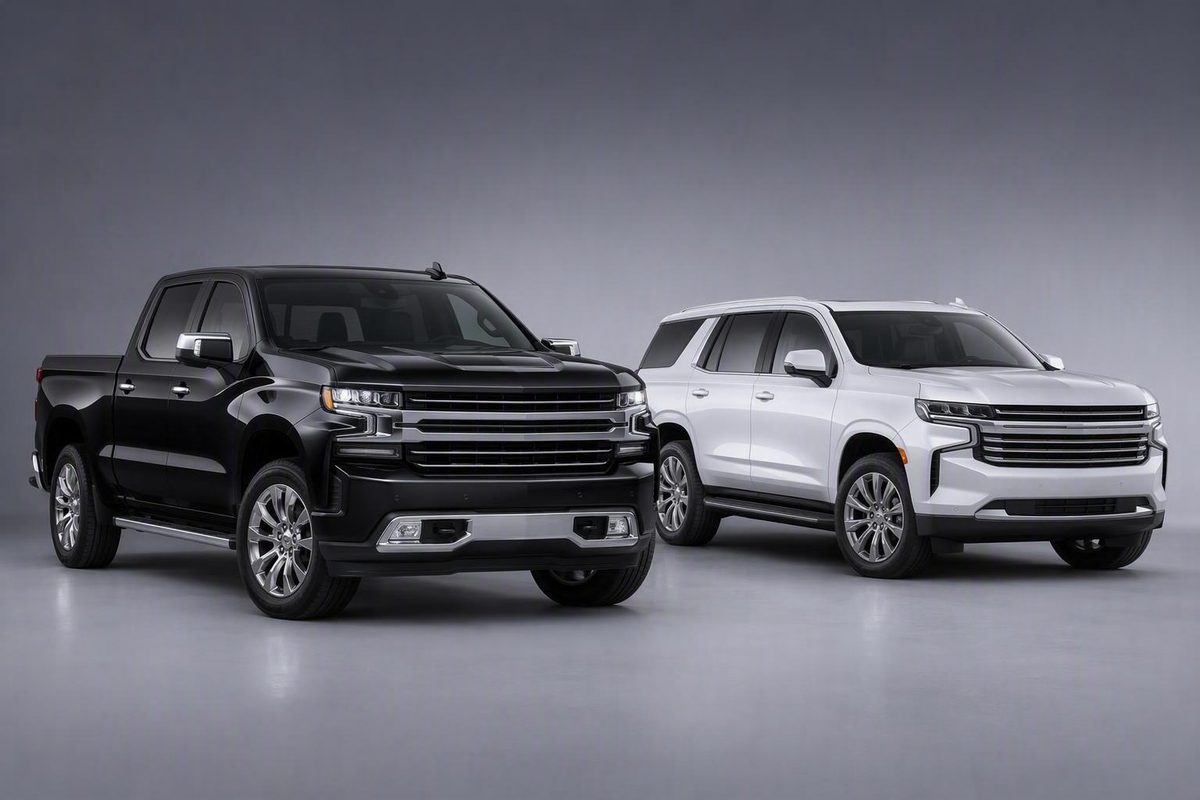
Commonly read as "Luxury Touring Z," LTZ usually marks a more upscale trim than LT. The evidence does not establish what Z independently stands for.
The short answer: LTZ commonly means “Luxury Touring Z”
LTZ is commonly expanded as “Luxury Touring Z” on a Chevrolet. The related LT designation is commonly expanded as “Luxury Touring.” Both definitions appear throughout U.S. Chevrolet dealership material, including Pride Chevrolet’s explanation of LT and LTZ.
That answer needs an important qualification: the available evidence consists of dealership and third-party explanations, not a current Chevrolet or General Motors corporate glossary formally defining LTZ. Turan-Foley Chevrolet describes “Luxury Touring Z” as the widely cited explanation while noting that Chevrolet does not formally define LTZ on current model pages (see its LT-versus-LTZ discussion).
The careful answer is therefore:
LTZ is commonly understood to mean “Luxury Touring Z,” but the available evidence does not establish that phrase as a current official Chevrolet corporate definition.
LTZ is also a trim designation, not a separate Chevrolet model. A Silverado LTZ is still a Silverado; LTZ identifies its trim level within that model’s lineup.
In practical terms, an LTZ badge generally indicates a more upscale, better-equipped trim than LT. It often points to upgraded cabin materials, comfort features, infotainment, cameras, parking aids, lighting, or other convenience equipment. It does not guarantee that every LTZ has the same features.
Exact equipment depends on the vehicle line, model year, market, body or cab configuration, drivetrain, engine, packages, and individual options. The cited usage and examples in this article primarily reflect U.S. dealership material, so names and specifications may differ in other markets.
Why the final Z does not have a settled definition
The full expression “Luxury Touring Z” and the independent meaning of the final Z are not necessarily the same question.
Some dealership explanations say that Z marks the highest or a higher level of Luxury Touring. That interpretation appears consistent with LTZ’s usual placement above LT, but the sources do not supply Chevrolet corporate documentation proving that this is the letter’s formal origin or definition.
There is also a conflicting explanation. Rydell Chevrolet says LT means “Luxury Touring” but asserts that the Z has no specific standalone meaning, suggesting instead that it echoes Chevrolet performance designations such as Z51 and Z06. The article also offers a playful alternative, but presents it as speculation rather than documented history (read Rydell Chevrolet’s account of the LTZ name).
It helps to separate three conclusions:
- Common usage: LT is widely expanded as “Luxury Touring.”
- Common but not corporately confirmed here: LTZ is widely expanded as “Luxury Touring Z.”
- Unresolved: The available evidence does not establish what Z independently stands for, if anything.
LTZ’s position in a trim hierarchy does not settle its etymology. A badge can function as a higher-tier designation without every letter having a separately documented meaning.
Repeated dealership usage remains useful because it shows how the term is commonly explained to buyers. It does not carry the same authority as a manufacturer glossary, historical brochure, ordering guide, press release, or corporate naming document. Several dealership pages can repeat the same convention without independently proving its origin.
The responsible formulation is simple:
The Z functions as part of the LTZ trim name, but its standalone meaning remains unresolved in the available evidence.
That uncertainty has little effect on a buying decision. The badge’s practical function is clearer than its naming history: LTZ usually represents an equipment step above LT.
What an LTZ badge means in practical terms
A trim badge is shorthand for a vehicle’s general equipment level. In the case of LTZ, that shorthand usually points toward more premium materials and additional comfort, convenience, and technology.
The examples below describe recurring patterns, not a universal LTZ package.
Upholstery and seat comfort
LTZ is frequently associated with leather or leather-appointed seating. Depending on the vehicle and year, it may also include or offer:
- Heated front seats
- Ventilated front seats
- Additional power adjustment
- Seat-position memory
- Upgraded interior trim
“Leather-appointed” should not automatically be read as full leather on every seating surface. Nor should a heated or ventilated seat be assumed standard merely because an LTZ badge is present.
The distinction matters when comparing used vehicles. An LTZ may have the expected seating material but lack a particular comfort package, or its original seat equipment may have been repaired or replaced.
Infotainment and audio
Model-specific LTZ descriptions may include:
- Premium-branded audio
- Integrated navigation
- Wireless device charging
- Larger or enhanced displays
- Additional connectivity or charging provisions
For example, Rydell Chevrolet’s Silverado comparison associates the LTZ discussed there with Bose audio, navigation, and wireless charging. Those are Silverado examples from the article’s context, not promises about every Chevrolet carrying an LTZ badge.
Cameras, parking aids, and driver assistance
Some LTZ configurations include or make available additional equipment for parking, maneuvering, or driver assistance. Depending on the exact vehicle, examples may include:
- Surround-view camera technology
- Front or rear parking aids
- Blind-zone alerts
- Rear cross-traffic alerts
- Other driver-assistance features
Jack Burford Chevrolet’s trim guide cites examples such as a surround-view camera system and advanced driver-assistance equipment while also showing why the vehicle and year must be identified before drawing conclusions (review its Chevrolet trim-level guide).
A feature category or system name should not be inferred from the badge. Confirm the installed equipment through vehicle-specific documentation and test it on the actual vehicle.
Lighting and exterior convenience
LTZ examples may feature upgraded headlamps, fog lamps, taillamps, mirrors, exterior trim, or powered access equipment.
Body style matters. A Silverado description might discuss a power-operated tailgate, while an SUV could use a power liftgate. Equipment tied to one body style should not be transferred to another simply because both vehicles use the LTZ name.
Truck utility and trailering equipment
On Chevrolet pickups, certain LTZ configurations may include or offer bed conveniences, trailering equipment, camera views, tailgate functions, or related packages.
These are truck-specific possibilities rather than part of a universal LTZ formula. Those items require documentation for the exact vehicle.
Why the badge is not a complete feature list
A finished LTZ can combine several layers of equipment:
- Features standard on the trim
- Factory option packages
- Standalone options
- Configuration-dependent equipment
- Market-specific content
- Dealer-installed accessories
- Changes made by later owners
Treat LTZ as a category label and starting point—not as a substitute for the window sticker, build documentation, or physical inspection.
LT versus LTZ: the useful comparison
The general relationship is straightforward:
- LT: commonly expanded as “Luxury Touring”
- LTZ: commonly expanded as “Luxury Touring Z” and usually positioned above LT
LTZ generally includes or makes available more upscale equipment. In a like-for-like comparison, the more extensively equipped trim normally costs more; DeNooyer Chevrolet makes that price-and-equipment distinction in its Silverado-oriented LT-versus-LTZ comparison.
That does not make LTZ automatically better. The useful question is whether the additional equipment on a specific LTZ matters enough to justify its price relative to a closely matched LT.
The following table is a generalized buying framework, not a Chevrolet specification sheet:
| Comparison area | LT, generally | LTZ, generally |
|---|---|---|
| Cabin materials | Equipment varies; may use practical or upgraded materials | More commonly associated with upgraded or leather-appointed upholstery |
| Seat comfort | Heating, power adjustment, and related amenities vary | More likely to include or offer expanded comfort features |
| Infotainment | Core infotainment and connectivity depend on the model | May add premium audio, navigation, charging, or enhanced displays |
| Cameras and parking | Availability depends on year and packages | More likely to include or offer additional camera views and parking aids |
| Driver assistance | Exact systems vary by vehicle and year | May include or make available additional assistance equipment |
| Exterior convenience | Model-specific functional equipment | May add upgraded lighting, mirrors, trim, or powered access |
| Pickup utility | Package- and configuration-dependent | May add bed, camera, tailgate, or trailering conveniences |
| Price | Usually lower in an otherwise equivalent comparison | Usually higher when it includes more equipment |
Cabin materials
LTZ is commonly associated with upgraded or leather-appointed seating. LT is more variable than simple comparisons imply: its upholstery depends on the vehicle, year, and selected options.
Do not dismiss an LT as necessarily basic, and do not assume that every surface in an LTZ cabin is leather. Inspect the vehicle and consult its equipment documentation.
Comfort and convenience
Heated or ventilated seats, expanded power adjustment, remote-start capability, upgraded mirrors, and powered tailgate or liftgate equipment appear in various LTZ descriptions.
The exact combination matters more than the badge. A buyer who values ventilated seats, for example, should verify that feature directly rather than assuming it comes with every LTZ.
Technology and safety equipment
LTZ can provide a convenient route to more technology, but it does not necessarily include every system available for the model.
Premium audio, navigation, wireless charging, camera systems, parking aids, and additional driver-assistance equipment appear in model-specific LTZ examples. Some may still depend on an option package or configuration.
Compare named equipment line by line. Broad phrases such as “advanced safety” or “premium technology” are not substitutes for an actual list of installed systems.
Price and value
An LTZ’s additional equipment can produce a higher price than a comparable LT. Used-vehicle comparisons are less straightforward because trim is only one part of the vehicle being evaluated.
The choice should follow the buyer’s priorities:
- LT may be the better fit if it already includes the required capability and comfort.
- LTZ may be the better fit if its additional materials, cameras, audio, seating features, or conveniences are genuinely useful.
- Either may be unsuitable if the individual vehicle lacks a must-have feature.
Value is specific to the vehicle and buyer. LTZ is not automatically the better purchase simply because it sits higher in the trim range.
How to make a valid LT-versus-LTZ comparison
Hold as many variables constant as possible:
- Vehicle model
- Model year
- Market
- Body or cab configuration
- Drivetrain
- Engine
- Major packages
- Standalone options
- Condition, if used
Comparing an LT with one engine and drivetrain against an LTZ with a different powertrain does not isolate the effect of the trim. The same problem arises when the cab, body, package, or model year changes.
Start with two closely matched vehicles. Identify what the LTZ actually adds, then decide whether those additions justify the difference for your needs.
Where LTZ sits in Chevrolet’s trim hierarchy
LTZ is not always Chevrolet’s highest trim.
Its position depends on the model and model year. The Silverado provides a concrete example: dealership comparisons place LTZ above LT but below High Country. Mid-State Chevrolet describes that order in its Silverado LT and LTZ comparison.
That example should not be turned into a universal Chevrolet trim ladder. Chevrolet model lines may use names such as Premier, High Country, RS, ZR2, or other designations associated with different combinations of luxury, appearance, performance, or off-road positioning.
Not every Chevrolet offers LTZ, and a model’s trim names can change over time. A badge familiar from one vehicle or year may be absent from another.
The Tahoe illustrates the point. Boucher Chevrolet says the Tahoe lineup it discusses no longer offers LTZ and identifies Premier as the trim above LT (see its Tahoe note and trim comparison). That is a model-specific example of changing nomenclature, not evidence that Premier universally replaces LTZ across Chevrolet.
Three rules prevent most hierarchy mistakes:
- Do not assume LTZ is the flagship merely because it is above LT.
- Do not assume every Chevrolet model offers LTZ.
- Do not apply one model’s trim order to another vehicle line.
To determine LTZ’s position, use the trim list for the exact model and model year under consideration.
Why LTZ features and availability change by model year
LTZ is not one fixed package copied identically across every Chevrolet. It is a trim name used within particular vehicle lines, each of which can assign different equipment to it.
The specification may vary according to:
- Vehicle line: A pickup and an SUV serve different purposes.
- Model year: Trim content and availability can change as a lineup evolves.
- Market: Specifications and trim names may differ by country or region.
- Body or cab configuration: Equipment may depend on the selected body.
- Drivetrain: Two-wheel-drive and four-wheel-drive configurations may differ.
- Engine: Powertrain availability can depend on trim and configuration.
- Packages: A desired feature may be grouped into a technology, comfort, appearance, or trailering package.
- Individual options: Some equipment may be selected separately.
This is why Silverado equipment must remain a Silverado example. A bedliner, power tailgate, trailering feature, or truck-specific camera view cannot be assigned to an unrelated Chevrolet car or SUV.
Even within one model line, two LTZ vehicles may differ because their engines, drivetrains, body configurations, packages, or standalone options are not identical.
Used vehicles require additional caution. An LTZ badge does not prove that every original feature remains installed or functional. Exterior badging may also have been replaced.
Both are necessary when a feature materially affects the buying decision.
A definitive list of every current Chevrolet model offering LTZ would also become outdated and could mislead readers in other markets. Check the exact model-year lineup instead.
How to verify what a specific Chevy LTZ includes
Begin with the exact model and model year, not a generic search for “Chevy LTZ features.” Then narrow the vehicle by market, body or cab style, drivetrain, engine, and major packages.
1. Find the original window sticker
The original window sticker can help distinguish:
- Standard equipment
- Option packages
- Standalone options
- Powertrain and drivetrain
- Exterior and interior colors
- Listed factory or destination-installed equipment
Confirm that the VIN on the sticker matches the VIN on the vehicle. Documentation for a similar-looking LTZ is not a substitute.
2. Obtain a VIN-linked build record
Ask for vehicle-specific equipment information rather than relying only on a generic VIN decoder.
Use the most complete record available and compare it with the window sticker when possible.
3. Consult the correct brochure or ordering guide
Make sure the document matches:
- The model year
- The vehicle line
- The relevant market
- The body or cab configuration
- Light-duty or heavy-duty status, when applicable
A brochure from a different year should not be treated as evidence simply because the vehicles look similar.
4. Use Chevrolet’s configurator for an applicable current vehicle
If ordering a vehicle, save the resulting build summary and compare it with the final dealer paperwork. The final documentation—not the LTZ badge alone—should identify the selected configuration.
5. Determine how each required feature is supplied
For every feature that matters, ask whether it is:
- Standard on LTZ
- Included in a package
- Individually optional
- Limited to a particular body, drivetrain, or engine
- Not available on that configuration
This is particularly useful for seating features, premium audio, navigation, wireless charging, camera systems, parking aids, trailering equipment, and powered tailgate or liftgate functions.
6. Compare the documents with the physical vehicle
Confirm that the listed equipment is present and operational. Test the seats, cameras, infotainment system, charging equipment, lights, mirrors, parking aids, climate controls, and powered access features that matter to you.
For a used vehicle, inspect for replaced or missing equipment rather than relying exclusively on the original build record.
7. Treat 1LTZ and LTZ1 cautiously
Labels such as 1LTZ and LTZ1 appear in some dealership material. The available evidence does not establish one universal meaning or demonstrate that these terms are always interchangeable with LTZ. Chevrolet Center notes that such variations may be encountered in its trim-level breakdown.
Do not infer their meaning from another model or year. Check the exact vehicle’s window sticker, ordering guide, VIN-linked record, or dealer documentation.
8. Verify configuration-sensitive specifications separately
Do not infer engine, drivetrain, towing capacity, payload, trailering equipment, or installed safety systems solely from an LTZ badge. Verify each required specification through the applicable vehicle documentation.
For a used vehicle, compare those records with the vehicle itself. The trim name cannot establish present condition or confirm that original equipment remains installed.
Chevy Truck Expert publishes broader material about Chevrolet truck and SUV specifications, trims, beds, and maintenance; its About page explains the publication’s scope and editorial approach.
It remains an independent enthusiast publication rather than a Chevrolet or General Motors source, and its terms state that it is not affiliated with or endorsed by General Motors. Manufacturer and vehicle-specific records should therefore remain the primary sources for confirming an individual build.
Frequently asked questions
Does Chevrolet officially say LTZ stands for “Luxury Touring Z”?
“Luxury Touring Z” is the commonly cited expansion in the available dealership and third-party explanations. The supplied evidence does not include a current Chevrolet or General Motors corporate glossary formally confirming it as the official definition.
The accurate wording is: LTZ is commonly understood to mean “Luxury Touring Z,” but that expansion is not established here through a Chevrolet corporate source.
Is LTZ better than LT?
LTZ is generally more highly equipped than LT, but “better” depends on the buyer and the individual vehicle.
LTZ may suit someone who values upgraded materials, seating features, cameras, premium audio, or other convenience equipment. LT may be the stronger choice if it already provides everything the buyer needs.
Compare the same model year, drivetrain, engine, body or cab configuration, packages, and condition. Otherwise, differences unrelated to trim can distort the comparison.
Is LTZ always the top Chevrolet trim?
No. LTZ can be an upper-tier trim without being the flagship. In the cited Silverado hierarchy, it sits above LT and below High Country.
Other Chevrolet lineups may use different premium, appearance, performance, or off-road trim names. Some do not offer LTZ, and the hierarchy can change between models and years.
Do all Chevy LTZ vehicles have leather seats and the same technology?
No. Leather or leather-appointed seating is commonly associated with LTZ, as are features such as heated or ventilated seats, premium audio, wireless charging, cameras, parking aids, and driver-assistance equipment.
Those are recurring examples, not universal guarantees. Confirm the exact vehicle through its window sticker or VIN-linked build record, then inspect it to ensure the equipment is present and functional.
What do 1LTZ and LTZ1 mean?
These labels appear in some dealership material, but the available evidence does not establish a single definition that applies across all Chevrolet models and years.
Do not assume that 1LTZ, LTZ1, and LTZ are universally interchangeable. Verify the designation through documentation for the exact vehicle.
The bottom line
LTZ is commonly read as “Luxury Touring Z,” but the available sources do not establish that phrase as a current official Chevrolet corporate definition or resolve what the Z means independently.
The dependable takeaway is practical: LTZ generally identifies a more upscale trim than LT. It is not always the highest trim, and it never guarantees one universal feature list.
Use the badge as a starting point. For a buying decision, confirm the exact equipment through the original window sticker, a VIN-linked build record, the applicable model-year brochure or ordering guide, and the vehicle itself.