
2019 Silverado 2500HD: Gas vs. Diesel, Bed Sizes and Tow Ratings
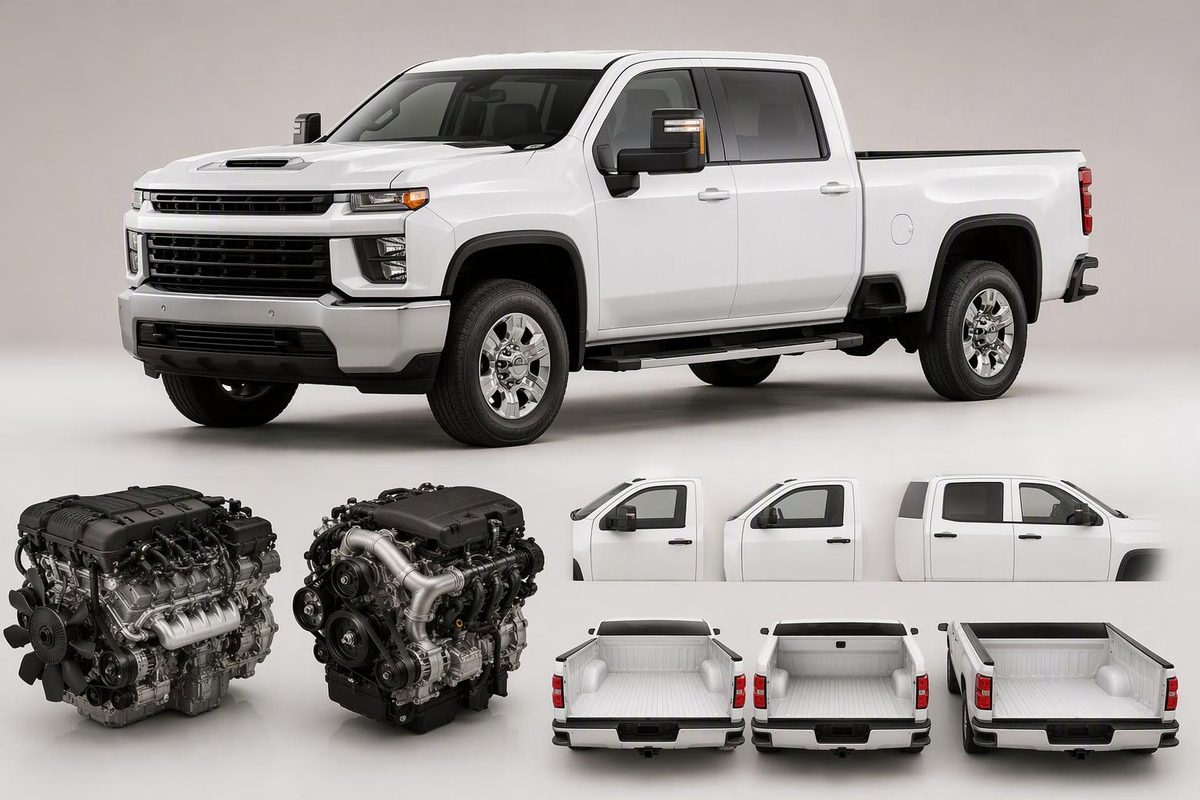
Compare 2019 Silverado 2500HD engines, cab and bed dimensions, trims and configuration-specific towing ratings, plus checks before buying used.
The 2019 Chevrolet Silverado 2500HD offers a 360-hp 6.0L gas V8 or a 445-hp 6.6L Duramax diesel, both with six-speed automatic transmissions. Its two bed lengths measure 78.86 inches and 97.76 inches inside at the floor. Maximum towing reaches 14,500 lb conventionally or 15,400 lb by fifth-wheel/gooseneck, but those figures apply to different configurations—not every 2500HD. Chevrolet’s 2019 order guide supplies the U.S. configuration-specific specifications below.
The 2019 HD precedes the redesigned 2020 truck. The newer model introduced the 6.6L gas V8 and paired the diesel with a ten-speed Allison; neither describes a factory-stock 2019 2500HD. 2020 model changes. If you are comparing half-ton listings, use the separate 2019 Silverado 1500 and LD guide.
Engines and transmissions
| Specification | 6.0L Vortec gas V8 | 6.6L Duramax turbo-diesel V8 |
|---|---|---|
| Engine RPO | L96 | L5P |
| Horsepower | 360 hp at 5,400 rpm | 445 hp at 2,800 rpm |
| Torque | 380 lb-ft at 4,200 rpm | 910 lb-ft at 1,600 rpm |
| Transmission | Heavy-duty six-speed automatic | Allison 1000 six-speed automatic |
| Rear axle ratio | 4.10 | 3.73 |
| Cab availability | Double Cab or Crew Cab | Crew Cab only |
These are the mainstream U.S. factory powertrains. Chevrolet also listed an LC8 6.0L gaseous-fuel-capable engine for Crew Cab upfitter applications. It left the factory with a gasoline fuel system; CNG/LPG equipment required an aftermarket conversion. A converted fleet truck needs its own equipment check. 2019 engine and transmission specifications.
The diesel’s torque and included exhaust brake are useful reasons to consider it for frequent heavy towing. Do not assume it also gives you more payload: compare the truck’s load label before paying extra for the powertrain. For engine-code context, see the 6.6L Duramax identification guide.
Cab, bed and parking dimensions
The U.S. 2019 order guide lists Double Cab and Crew Cab pickups, not a Regular Cab. Double Cab standard-bed trucks are 4x4 only; the other cab-and-bed combinations offer 2WD or 4x4.
| Cab and bed | Inside bed length | Cargo volume | Wheelbase | Overall length |
|---|---|---|---|---|
| Double Cab, standard bed | 78.86 in | 61.0 cu ft | 144.2 in | 230.0 in |
| Double Cab, long bed | 97.76 in | 76.3 cu ft | 158.1 in | 248.9 in |
| Crew Cab, standard bed | 78.86 in | 61.0 cu ft | 153.7 in | 239.5 in |
| Crew Cab, long bed | 97.76 in | 76.3 cu ft | 167.7 in | 258.4 in |
Dimensions are factory figures without optional equipment or accessories. Both beds measure 51.02 inches between the wheel housings. Body width is 80.51 inches, which is not a mirror-clearance measurement. Chevrolet dimensions and capacities, pages 88–91.
For cargo, a nominal 48-by-96-inch plywood sheet fits between the wheel housings and within the long bed’s published floor length. The standard bed cannot contain its full length with the tailgate closed. Liners, toolboxes and other accessories reduce usable space; measure the actual truck before buying a close-fitting load or bed accessory.
For passengers, Crew Cab rear legroom is 40.93 inches, versus 34.63 inches in Double Cab. For parking, the Crew Cab long bed is 21 feet 6.4 inches overall, before allowing clearance to walk around it or close a garage door. Factory cab dimensions. Those measurements make the Crew Cab standard bed worth considering when both rear-seat space and parking length matter.
Towing ratings by configuration
All figures below are maximum trailer weights in pounds. Gas trucks use the 4.10 axle; diesels use 3.73. A dash means the diesel configuration is not listed as available.
| Cab, bed and drive | Gas conventional | Gas fifth-wheel/gooseneck | Diesel conventional | Diesel fifth-wheel/gooseneck |
|---|---|---|---|---|
| Double Cab standard, 4x4 | 13,000 | 14,200 | — | — |
| Double Cab long, 2WD | 14,400 | 14,400 | — | — |
| Double Cab long, 4x4 | 14,100 | 14,100 | — | — |
| Crew Cab standard, 2WD | 13,000 | 14,300 | 13,000 | 15,400 |
| Crew Cab standard, 4x4 | 13,000 | 14,000 | 13,000 | 13,500 |
| Crew Cab long, 2WD | 14,300 | 14,200 | 14,500 | 14,800 |
| Crew Cab long, 4x4 | 13,900 | 13,900 | 14,500 | 12,400 |
Chevrolet’s 2019 brochure and order-guide trailering tables, pages 94–95 agree on these ratings. They assume a standard-equipped truck, a driver and required trailering equipment. Additional passengers, cargo and optional equipment reduce available trailer capacity.
Check payload before choosing a fifth-wheel. Published maximum Crew Cab standard-bed 4x4 payload is 2,943 lb with gas and 2,513 lb with diesel. Your particular truck’s label may be lower. Chevrolet’s payload table and loading guidance.
As a planning example, a loaded 12,000-lb fifth-wheel with 20% pin weight puts 2,400 lb on the truck before occupants, hitch hardware or other cargo. Against the published diesel payload above, that leaves only 113 lb. This can exhaust payload even when the trailer is below the tow rating. Verify loaded axle weights, GVWR, combined-weight and hitch limits—not just the table’s trailer weight.
Trims and used-buying checks
The four trim levels are WT, LT, LTZ and High Country. WT supplies the work-oriented cabin and a seven-inch touchscreen; LT adds carpeting and an eight-inch screen. LTZ adds heated leather-appointed seating, remote start and dual-zone automatic climate control. The Crew Cab-only High Country brings heated and ventilated front buckets, navigation and Bose audio. Z71 is an off-road package, not a fifth trim. 2019 trim and package details.
Before buying:
- Confirm the build: match the VIN and equipment records to the engine, cab, bed, axle and towing setup. Do not rely on an advertisement’s generic maximum rating.
- Photograph the load and certification labels: use them to assess your passengers, tools, hitch and trailer tongue or pin weight.
- Inspect prior work use: have an independent shop check the frame, hitch mounting, brakes, steering, suspension, leaks and transmission operation. Look closely at plow-equipped or heavily modified trucks.
- For a diesel: request service records and an inspection of the fuel and emissions systems, including any non-factory modifications.
- Check recalls by VIN: NHTSA’s recall lookup identifies unrepaired safety recalls, but does not show recalls already completed and may omit newly announced recalls while VIN coverage is being established. Ask for repair documentation as well.